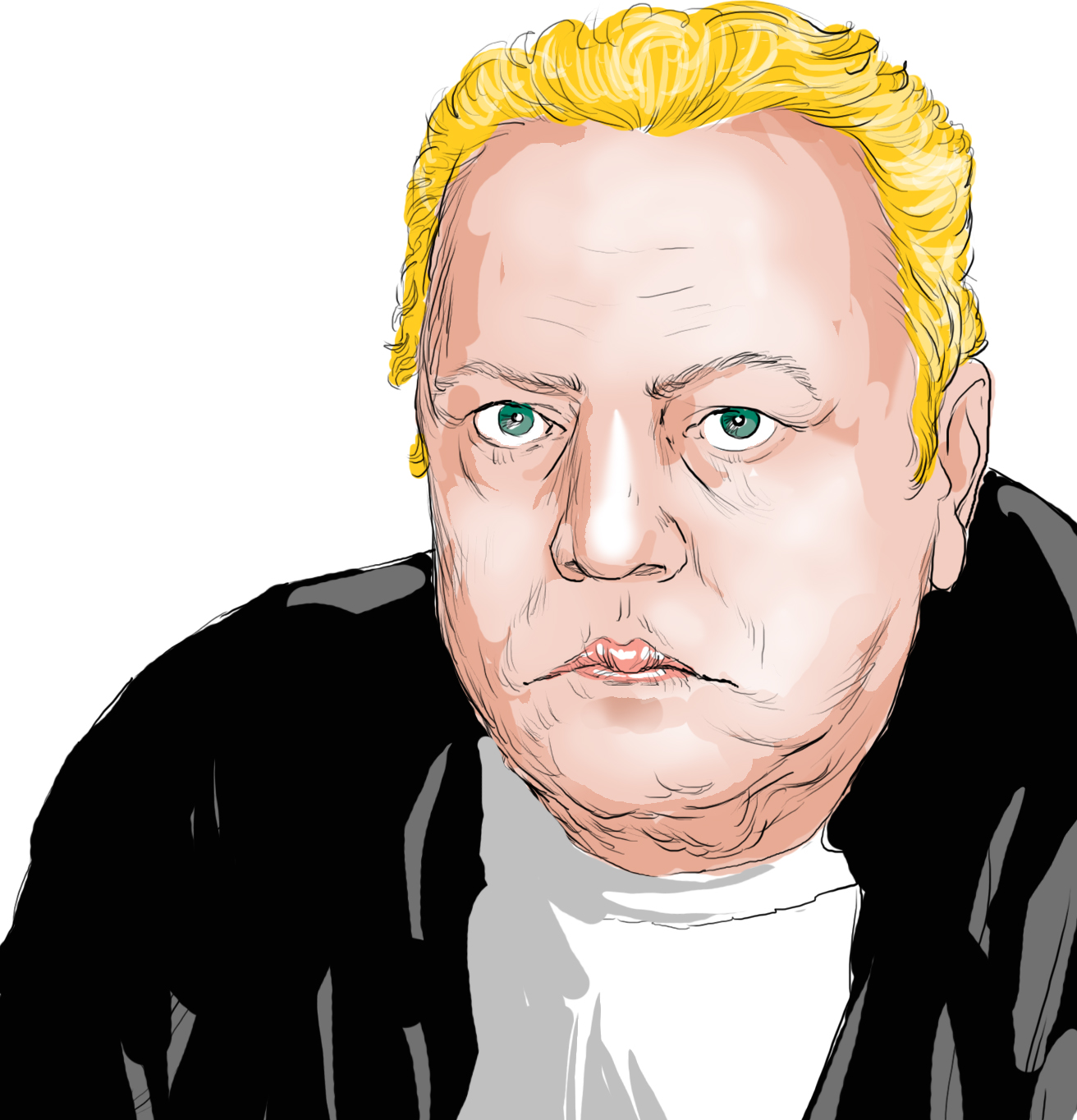
Larry Flynt was, depending on who you ask, a pornographer, a free speech martyr, a provocateur, or all three at once. He won a landmark First Amendment case at the US Supreme Court, was shot and paralysed by a white supremacist, ran for president as a joke that was only partly a joke, and spent five decades enraging people professionally.
He also described mood extremes — enormous manic spending and drive, followed by black depressive collapse. Whether that was bipolar disorder is genuinely difficult to answer, because the shooting in 1978 left him with pain severe enough to explain a great deal on its own.
Quick facts
- Born
- Larry Claxton Flynt Jr., November 1, 1942, Lakeville, Kentucky
- Died
- February 10, 2021, Los Angeles, aged 78
- Known for
- Founder of Hustler; Hustler Magazine v. Falwell (US Supreme Court, 1988)
- Diagnosis
- Reported and discussed, but complicated by severe chronic pain and opioid use
- 1978
- Shot by a white supremacist; paralysed from the waist down and in pain thereafter
Kentucky
Flynt was born in extreme poverty in rural Kentucky in 1942. His parents separated; he joined the army at fifteen using falsified papers, later served in the navy, and afterwards bought a bar in Dayton, Ohio with money saved from factory work.
The bars became the Hustler Clubs, and the newsletter he wrote to promote them became Hustler magazine in 1974. Its rise was fast, and it defined itself against Playboy by being deliberately cruder, more political and more offensive.
Legal trouble followed almost immediately and never stopped. He was convicted of obscenity, jailed, appealed, and was in and out of courtrooms for the rest of his life.
1978
In March 1978, during an obscenity trial in Georgia, Flynt was shot outside the courthouse by Joseph Paul Franklin, a serial killer and white supremacist who later said he had targeted Flynt over a magazine photo spread featuring an interracial couple.
Flynt survived, paralysed from the waist down and in severe, permanent pain. This is the hinge of his entire biography, and it is routinely underweighted.
He became dependent on opioid painkillers, by his account heavily so, until surgery years later cut some of the relevant nerves and reduced the pain. He has described the period of dependence as a fog he could not think through.
The Mood Question
Flynt described periods of grandiose energy and spending — buying property and aircraft, launching ventures, and pursuing feuds with a stamina that exhausted everyone around him — and periods in which he could not function at all. Reports of a bipolar diagnosis have circulated for decades.
Some of his most conspicuous behaviour dates from the immediate post-shooting years, which is exactly the period in which he was on very large quantities of opioids while adjusting to catastrophic injury.
The honest reading is that there are at least three plausible contributors here and no clean way to separate them: a possible primary mood disorder, severe chronic pain, and long-term opioid dependence. Each produces mood instability. Each makes the others harder to treat. And Flynt, unlike Patty Duke or Maurice Benard, never made a clear public disclosure of a diagnosis and treatment that we can point to with confidence.
We list him because he is widely listed and because he described the mood extremes himself. We would not describe his case as established.
Hustler Magazine v. Falwell
Whatever anyone thinks of Flynt's business, his contribution to American law is substantial and is taught in every constitutional law course.
In 1983 Hustler ran a parody advertisement depicting the televangelist Jerry Falwell describing a drunken encounter with his mother in an outhouse. Falwell sued. The case reached the Supreme Court, which in 1988 ruled unanimously in Flynt's favour, holding that public figures cannot recover damages for emotional distress caused by parody that no reasonable person would take as stating actual facts.
It is one of the most important free speech decisions in American history, and it protects satirists of every political stripe. Flynt and Falwell subsequently, and improbably, became something close to friends, debating together on college campuses.
The People vs. Larry Flynt, Miloš Forman's 1996 film with Woody Harrelson, made the case widely known.
Legacy
Flynt died in February 2021, aged seventy-eight, after more than four decades in a wheelchair.
His relevance to this website is mostly cautionary. He is a genuinely difficult case in which mood symptoms, chronic pain and long-term opioid use are entangled beyond separating — the same problem we ran into with Elizabeth Taylor, and one that a great many readers of this site will recognise from their own medical histories. Where pain and psychiatric symptoms coexist, treating either in isolation tends to fail.
Frequently Asked Questions
Did Larry Flynt have bipolar disorder?
Reports have circulated for decades and he described marked mood extremes himself, including manic spending and severe depressive periods. However, we can find no clear public disclosure of a diagnosis and treatment, and his severe chronic pain and long-term opioid dependence following the 1978 shooting provide an alternative explanation for much of the same picture.
What happened to Larry Flynt in 1978?
He was shot outside a Georgia courthouse during an obscenity trial by Joseph Paul Franklin, a white supremacist serial killer who later said he had targeted Flynt over a magazine feature depicting an interracial couple. Flynt survived, paralysed from the waist down and in permanent severe pain.
What was Hustler Magazine v. Falwell?
A 1988 US Supreme Court case in which the Court ruled unanimously that public figures cannot recover damages for emotional distress caused by parody that no reasonable person would take as factual. It remains one of the most significant free speech decisions in American law.
Notes & sources
This article draws on Larry Flynt's own public statements and interviews, contemporaneous reporting of the 1978 shooting and his medical treatment, and the Supreme Court's decision in Hustler Magazine v. Falwell.