Agatha Christie has sold more novels than any other writer in history, and the only genuine mystery attached to her name is one she never solved for anyone: where she went, and why, during eleven days in December 1926.
That episode is the entire reason she appears on lists of famous people with bipolar disorder. It is worth examining what actually happened, because the evidence points somewhere quite specific — and it is not bipolar disorder.
Quick facts
- Born
- Agatha Mary Clarissa Miller, September 15, 1890, Torquay, Devon
- Died
- January 12, 1976, Wallingford, Oxfordshire, aged 85
- Known for
- 66 detective novels; the best-selling novelist of all time
- Diagnosis
- None — and no real evidence of bipolar disorder
- The famous episode
- Disappeared for eleven days in December 1926, most likely in a dissociative fugue
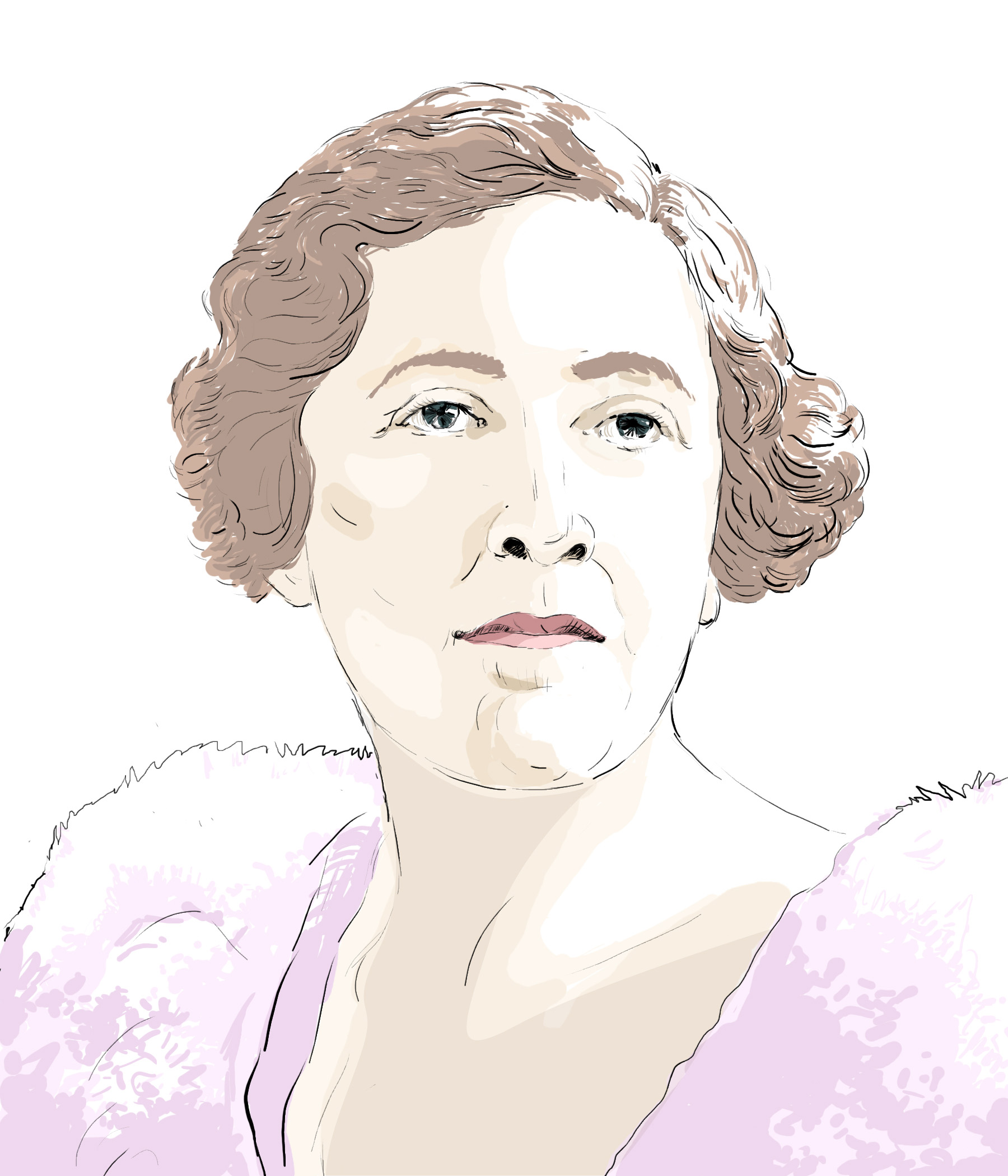
Torquay
Agatha Miller was born in Torquay in 1890 into a comfortable family and was largely self-taught, having been kept out of school by a mother who believed reading should wait until eight. She read early anyway.
She worked as a nurse and then in a hospital dispensary during the First World War, which gave her the encyclopaedic knowledge of poisons that runs through her fiction and that pharmacologists have since praised for its accuracy.
She married Archibald Christie in 1914. Her first novel, The Mysterious Affair at Styles, introduced Hercule Poirot in 1920, and by the mid-1920s she was successful and rising.
December 1926
1926 was catastrophic. Her mother, to whom she was extremely close, died in April. Christie spent the following months alone at the family home in Torquay sorting her mother's possessions, and later described this period as one in which she was barely functioning: not eating properly, not sleeping, and struggling to remember things.
In August, Archie told her he had fallen in love with Nancy Neele and wanted a divorce.
On the evening of 3 December, after a quarrel, Christie left her home in Berkshire. Her car was found the next morning abandoned above a chalk pit, headlights on, with her fur coat and driving licence inside.
What followed was one of the largest manhunts in British history: over a thousand police officers, civilian volunteers, aircraft, and Arthur Conan Doyle consulting a medium. The press coverage was enormous and largely hostile.
Eleven days later she was found at the Swan Hydropathic Hotel in Harrogate, where she had been staying under the surname Neele — the name of her husband's mistress. She did not appear to recognise her own photograph in the newspapers, and staff described her as calm and sociable throughout, apparently unaware that a national search was underway.
Doctors who examined her afterwards concluded she had experienced amnesia. She never gave a public account of the episode. It is entirely absent from her autobiography.
So What Was It?
Three explanations have circulated for a century.
A publicity stunt. This was the popular press's verdict at the time and it does not survive examination. Christie was already successful, hated publicity to a degree that lasted her entire life, and the affair was ruinous for her personally and professionally.
A deliberate attempt to frame or punish her husband. Registering under his mistress's name is certainly suggestive, and some biographers favour a version of this. It requires her to have sustained a cold performance in front of dozens of witnesses for eleven days while being emotionally shattered, which is a stretch.
A dissociative fugue. This is the explanation most modern clinicians favour, and it fits the evidence closely. Dissociative fugue is a rare condition in which a person, following overwhelming psychological stress, travels away from home and loses access to their identity and memory, often adopting a new name and functioning apparently normally throughout. It typically resolves spontaneously. Christie's presentation — catastrophic stress from bereavement and marital collapse, travel, a new surname, apparent calm, failure to recognise herself, subsequent amnesia for the period — is close to a textbook description.
Why This Isn't Bipolar Disorder
It is worth being explicit, because Christie is listed confidently on a great many sites.
Bipolar disorder is defined by episodes of mania or hypomania alternating with depression. There is no evidence anywhere in Christie's long, extensively documented life of a manic episode: no elevated mood, no grandiosity, no reduced need for sleep, no impulsive sprees, no reckless spending or risk-taking, at any point across eighty-five years.
What there is: a single severe crisis in 1926 during overwhelming compound stress, and a documented depressive period around her mother's death. One dissociative episode plus one reactive depression is not bipolar disorder, and describing it as such stretches the diagnosis past usefulness.
Her subsequent life is the clincher. She divorced Archie, married the archaeologist Max Mallowan in 1930, spent decades on Middle Eastern digs with him, and published prolifically and consistently for another forty-five years without any recorded recurrence of anything similar.
Legacy
Christie wrote 66 detective novels and 14 short story collections, created Poirot and Miss Marple, and wrote The Mousetrap, which has been running in London since 1952. UNESCO has recorded her as the most translated individual author in the world, and her sales are generally estimated in the billions of copies. The Murder of Roger Ackroyd, published in that same terrible year of 1926, is still argued about for the audacity of its central trick.
We keep this page because the question gets asked constantly. The honest answer is that the most famous woman in crime fiction had one of the most famous psychiatric episodes of the twentieth century, and it almost certainly was not bipolar disorder.
Frequently Asked Questions
Did Agatha Christie have bipolar disorder?
There is no evidence for it. Her long and well-documented life contains no record of manic or hypomanic episodes, which are required for a bipolar diagnosis. Her 1926 disappearance is best explained as a dissociative fugue following extreme stress, and her depression around her mother's death that year was reactive.
What happened during Agatha Christie's 11 missing days?
She disappeared on 3 December 1926 after her husband asked for a divorce, months after her mother's death. Her abandoned car was found the next morning. She was located eleven days later at a Harrogate hotel, registered under her husband's mistress's surname, apparently not recognising her own photograph in the papers. Doctors concluded she had amnesia, and she never publicly explained the episode.
What is a dissociative fugue?
A rare condition in which someone, after overwhelming psychological stress, travels away from home and loses access to their identity and autobiographical memory, sometimes adopting a new name while appearing to function normally. It usually resolves on its own, with amnesia for the period. It is the explanation most modern clinicians favour for Christie's disappearance.
Notes & sources
This article draws on contemporaneous press coverage of the December 1926 search, the accounts of hotel staff and the doctors who examined Christie afterwards, her own autobiography, and biographical scholarship. Christie never gave a public account of the episode.