Emerson kept a journal for over half a century, running to sixteen published volumes, and it is one of the great records of an interior life in American literature.
It is also the reason he appears on bipolar lists, because the journals do swing — between passages of near-ecstatic exaltation about nature and the divine, and passages of flat, cold despondency about his own coldness. Whether that is an illness or simply an unusually articulate person writing honestly over fifty years is the question worth asking.
Quick facts
- Born
- May 25, 1803, Boston, Massachusetts
- Died
- April 27, 1882, Concord, Massachusetts, aged 78
- Known for
- "Self-Reliance", "Nature", and founding American Transcendentalism
- Diagnosis
- None — retrospective, and in our assessment a weak case
- Documented
- Repeated devastating bereavements; a family history of mental illness
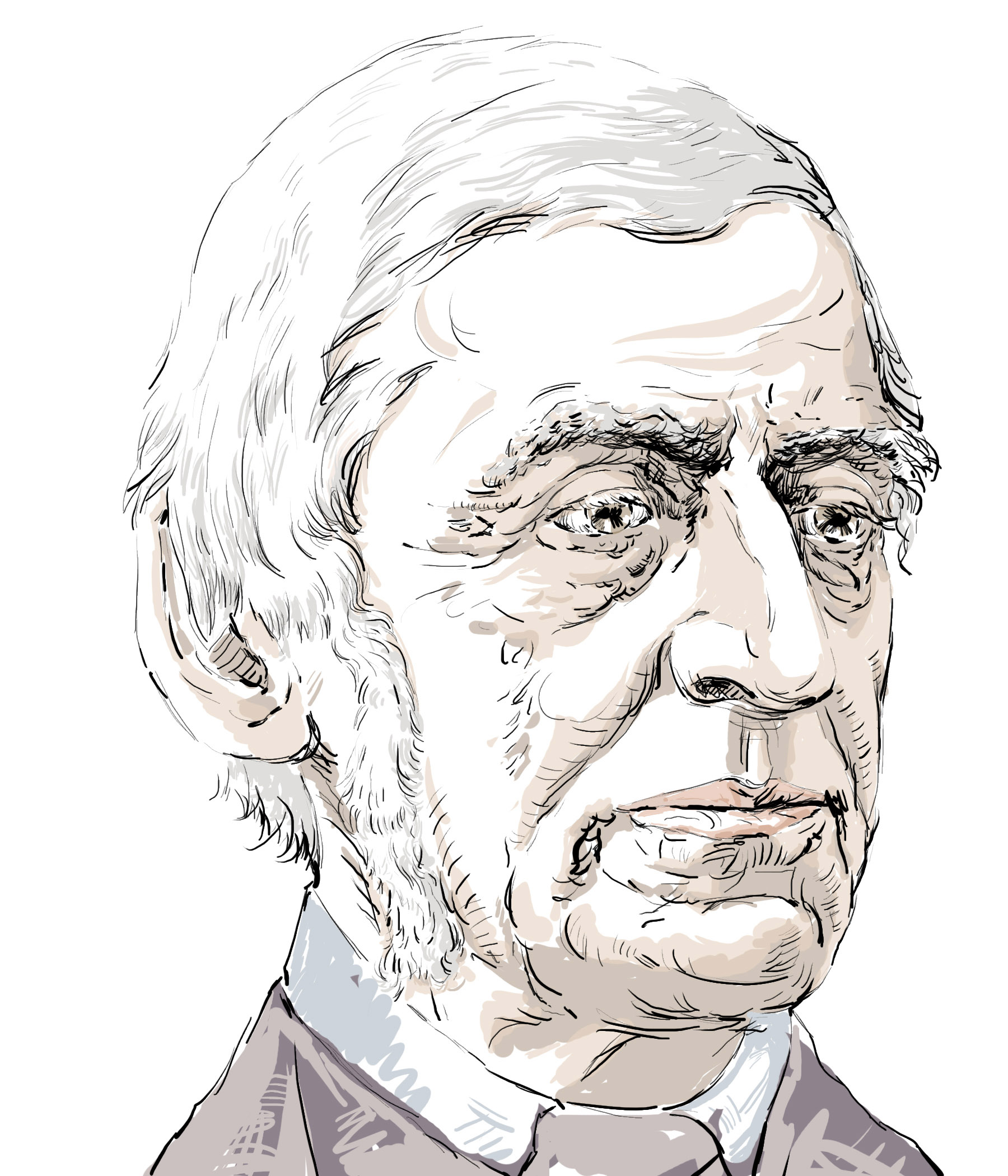
A Family Marked by Illness
Emerson was born in Boston in 1803, the son of a Unitarian minister who died when Waldo was eight, leaving the family in poverty. He went to Harvard, taught, and was ordained as a Unitarian minister in 1829.
Mental illness ran conspicuously through his family. Two of his brothers, Edward and Charles, suffered severe breakdowns; Edward's was florid enough to require restraint and institutionalisation, and Emerson wrote about witnessing it. Both brothers died young of tuberculosis, as did his first wife.
Emerson himself had periods of physical collapse in his twenties, including eye trouble and a suspected tubercular condition that sent him south to recuperate.
The Losses
In 1829 he married Ellen Tucker. She died of tuberculosis in 1831, aged nineteen, seventeen months into the marriage. Emerson's journal entries in the following period are among the most raw he ever wrote, and he visited her tomb repeatedly — recording, over a year later, that he had opened her coffin, an act that has occupied biographers ever since.
He resigned his ministry in 1832, unable to administer communion in good conscience, and travelled to Europe, where meeting Wordsworth, Coleridge and Carlyle set the direction of everything that followed.
In 1842 his son Waldo died of scarlet fever at five. Emerson's essay "Experience", written afterwards, contains the most disturbing thing he ever published: his admission that even this grief did not reach him properly, that it slipped away from him like everything else, and that he could not make it mean anything. That passage is frequently cited as evidence of a depressive flatness, and it is genuinely unsettling.
So Was Emerson Bipolar?
We think the case is weak, and it is worth explaining why, because Emerson illustrates a common error.
The elevated passages in the journals are philosophical and religious rather than clinical. When Emerson writes about becoming a transparent eyeball through which the currents of universal being circulate, he is articulating a mystical experience within a specific intellectual tradition — Romanticism, Neoplatonism, Unitarian theology — not reporting a mood state. Transcendentalism was, definitionally, about exaltation. Reading it as hypomania is a category error, rather like diagnosing a poet from their metaphors.
The depressive passages are more suggestive, but they cluster around bereavements of extraordinary severity: a young wife, two brothers, a five-year-old son. And what Emerson actually complains of most often is not despair but coldness — an inability to feel as strongly as he thought he should, which is a temperament he described consistently from youth to old age rather than an episodic change.
His life was also, externally, remarkably stable: a long second marriage, four children, a settled home in Concord, an unbroken fifty-year career of lecturing and publishing at a consistently high level. That is not the profile of untreated bipolar disorder in the nineteenth century.
The family history of mental illness is real and is the strongest thing in the case. It is not enough.
Legacy
Emerson essentially founded American philosophy as a distinct enterprise, mentored Thoreau, championed Whitman, and wrote the essays that Americans have been quoting at each other about self-reliance and non-conformity ever since.
His late years brought a genuine and well-documented cognitive decline — aphasia and memory loss, most likely a dementia — during which he lost the ability to recall common words and, according to a much-repeated account, described an umbrella as the thing that strangers take away. He remained, by all accounts, serene about it.
We include Emerson because he is widely listed, and we would rather give readers a reasoned negative than pad the list. A great writer with grief, a family history and a mystical streak is not the same as a bipolar patient.
Frequently Asked Questions
Was Ralph Waldo Emerson bipolar?
In our assessment the case is weak. The exalted passages in his journals reflect a Romantic and Transcendentalist religious philosophy rather than mood episodes, and his low periods followed severe bereavements. His externally stable fifty-year career and long settled family life do not fit untreated bipolar disorder in the nineteenth century, though the documented mental illness in his brothers is a genuine point in favour.
What losses did Emerson suffer?
His father died when he was eight; his first wife Ellen died of tuberculosis at nineteen, seventeen months into their marriage; two brothers suffered severe breakdowns and died young; and his five-year-old son Waldo died of scarlet fever in 1842.
What happened to Emerson in old age?
He experienced a progressive cognitive decline with aphasia and memory loss, most likely a form of dementia, losing the ability to recall common words. Accounts of his final years describe him as remaining calm and good-humoured throughout.
Notes & sources
This article draws on Emerson's published journals and letters, his essays including 'Experience', and biographical scholarship on his family, bereavements and late cognitive decline.