Of everyone on this website, Kay Redfield Jamison is the person we would most want a newly diagnosed reader to know about.
She is not famous for surviving bipolar disorder in spite of a career. She is famous for a career built on it: co-author of the definitive clinical textbook on manic-depressive illness, professor of psychiatry at Johns Hopkins, and the author of the memoir that did more than any other book to make the illness discussable. She has had bipolar I disorder since she was a teenager, and she took lithium for decades while writing the literature that other psychiatrists use to treat it.
Quick facts
- Born
- June 22, 1946, Washington, D.C.
- Known for
- An Unquiet Mind, Touched with Fire, Night Falls Fast
- Role
- Professor of Psychiatry, Johns Hopkins University School of Medicine
- Diagnosis
- Bipolar I disorder, diagnosed in her twenties; disclosed publicly in 1995
- Also
- Co-author of the standard clinical textbook on the illness
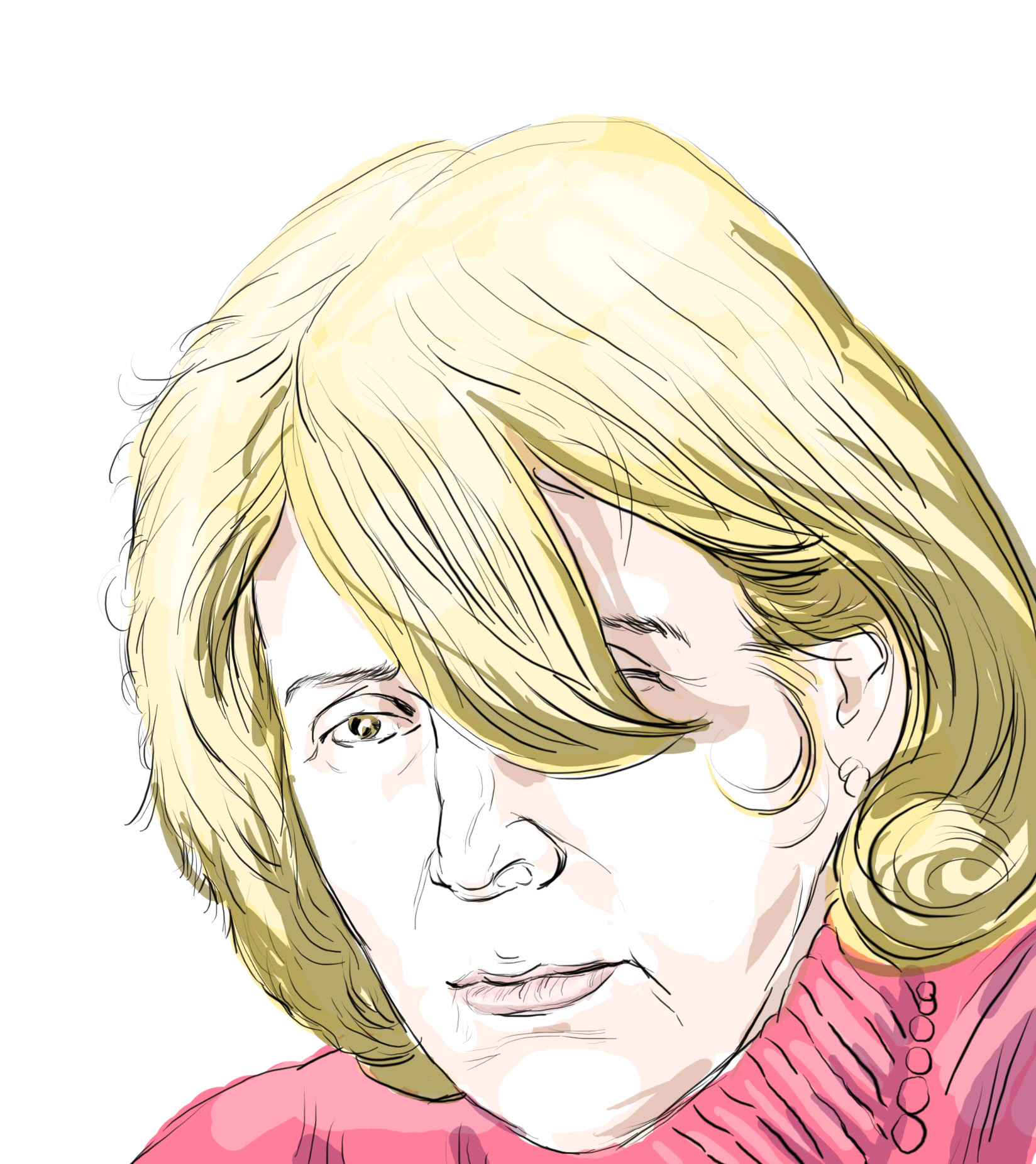
A Military Childhood
Jamison was born in Washington, D.C. in 1946 into an air force family, and grew up moving between postings — a childhood she has described as happy and secure until the moves and adolescence coincided.
Her first manic episode came at seventeen, in her senior year of high school. She has written about it with a precision that is difficult to match: the acceleration, the certainty, the sense that everything was connected and luminous, and then the collapse that followed and the months of blackness she could not explain to anyone.
She did not seek help. She went to university, studied psychology at UCLA, and continued to cycle undiagnosed through her degrees. She has been candid that part of the reason was straightforward: she was training in the field, she knew what the diagnosis meant, and she was frightened of it.
Diagnosis, and Refusing the Treatment
Jamison was diagnosed with bipolar I disorder as a young academic, by which point she was already on the faculty at UCLA and had co-founded its Affective Disorders Clinic — treating patients with the illness she had not yet admitted she had.
What she has written about most valuably is the period afterwards, when she repeatedly stopped taking lithium.
Her reasons will sound familiar to a great many readers of this site. She missed the highs. The elevated states were not merely pleasant but felt like the best version of herself — faster, funnier, more creative, more alive. Lithium dulled that. It also, at the doses used then, blurred her vision and made reading difficult, which for an academic was intolerable. And there was a simpler reason: taking the medication meant accepting she was ill.
She went off it several times. Each time the illness came back and took more. After a severe depressive episode in which she attempted suicide, she stayed on it.
Her account of this is not a lecture. It is a description of ambivalence written by someone who understands the pharmacology completely and still struggled with it, which is exactly why it has been so useful to so many people.
The Work
Jamison's professional output is substantial regardless of her personal history.
Manic-Depressive Illness, which she co-authored with Frederick Goodwin in 1990, is the standard clinical reference on the condition — the book psychiatrists themselves consult.
Touched with Fire (1993) examines the association between mood disorders and artistic temperament, working through poets, composers and artists with more rigour than the romantic version of that argument usually receives. It is the scholarly backbone of the question this whole website exists to ask.
An Unquiet Mind (1995) is her memoir, and the disclosure of her own illness. She has described the decision to publish it as professionally terrifying — a clinical academic voluntarily announcing a severe psychiatric diagnosis. It became a bestseller and has never gone out of print.
Night Falls Fast (1999) is her study of suicide, written partly in response to what she saw in her patients and partly out of her own experience. She has also written on Robert Lowell, on exuberance as a temperament, and on grief following the death of her husband.
She received a MacArthur Fellowship in 2001 and holds a chair in psychiatry at Johns Hopkins.
Why Her Story Matters Most
Most of the biographies on this website are stories about talent surviving illness, or not surviving it. Jamison's is different in a way that is worth stating plainly.
She is the counter-argument to the belief that runs through half the lives documented here — Axl Rose's, Kurt Cobain's, Adam Ant's — that treatment costs you the thing that makes you who you are. She has felt that fear more acutely than any of them, has written about it more honestly, and has spent thirty years demonstrating the opposite: a body of work produced on lithium, not despite it.
She does not claim treatment is easy or that the medication is free of cost. She is explicit that she mourns the highs. What she argues, from inside both the illness and the profession, is that the trade is worth making, and that people are usually deciding against it on bad information.
She has also been quietly clear that the romance of the mad artist has a body count. Her scholarship supports a real association between mood disorders and creativity; her memoir insists that the association is not a reason to leave the illness untreated.
Legacy
Jamison's practical influence is hard to overstate. She changed what psychiatrists are willing to disclose about themselves, changed how the public talks about bipolar disorder, and wrote the two books — one clinical, one personal — that most shaped modern understanding of the condition.
If you have just been diagnosed, or if someone you love has, An Unquiet Mind is the first thing we would put in your hands. It is short, it is beautifully written, and it is the only book on this subject written by someone who is simultaneously the patient and the world authority.
Frequently Asked Questions
Does Kay Redfield Jamison have bipolar disorder?
Yes. She has bipolar I disorder, with her first manic episode at seventeen. She disclosed her diagnosis publicly in her 1995 memoir An Unquiet Mind, while serving as a professor of psychiatry.
What books has Kay Redfield Jamison written?
Her best-known works are An Unquiet Mind (her memoir), Touched with Fire (on mood disorders and artistic temperament), Night Falls Fast (on suicide), and Manic-Depressive Illness, the standard clinical textbook co-authored with Frederick Goodwin.
Why did she stop taking lithium?
She has written openly about repeatedly stopping her medication early on: she missed the elevated states, found the side effects at the doses then used interfered with reading, and taking it meant accepting she was ill. Each time she stopped, the illness returned. She has remained on treatment since a severe depressive episode.
Notes & sources
This article draws on Kay Redfield Jamison's own published memoirs and academic work, particularly An Unquiet Mind (1995), and on public biographical information about her academic career at UCLA and Johns Hopkins.