If you wanted to construct the ideal historical case for retrospective diagnosis, you would build Virginia Woolf. She kept a diary for most of her adult life. She wrote thousands of letters. Her husband Leonard, who cared for her through every episode for twenty-nine years, kept meticulous notes on her symptoms, her sleep, her eating and her recovery, because he had worked out that catching an episode early was the only defence they had.
The result is that historians of medicine can trace the shape of her illness across four decades in a way that is almost impossible for any other figure of her era. What they find looks unmistakably like bipolar disorder.
Quick facts
- Born
- Adeline Virginia Stephen, January 25, 1882, South Kensington, London
- Died
- March 28, 1941, Rodmell, East Sussex, aged 59
- Known for
- Mrs Dalloway, To the Lighthouse, Orlando, A Room of One's Own
- Diagnosis
- None in her lifetime; near-universally identified retrospectively as bipolar disorder
- Evidence
- Her own diaries and letters, plus Leonard Woolf's detailed records of her episodes
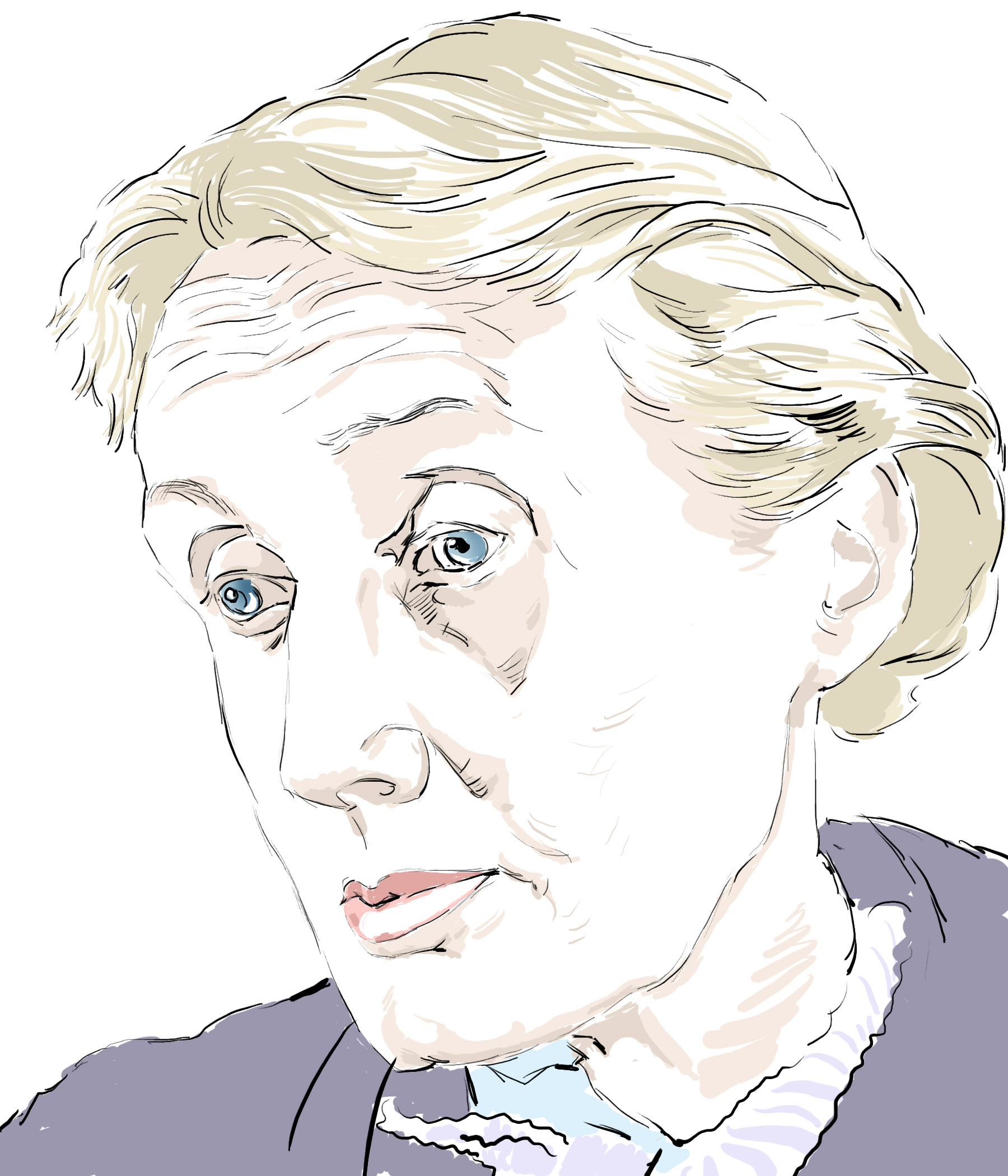
Hyde Park Gate
Virginia Stephen was born in January 1882 into a large, formidable and complicated Victorian household. Her father Leslie Stephen was a critic, editor and biographer; her mother Julia had been a model for the Pre-Raphaelites. Both had been widowed, and between them they brought together children from three sets of parents under one roof in South Kensington.
She was educated at home, largely by reading her way through her father's library — a fact she returned to repeatedly in her later feminist writing, contrasting her brothers' Cambridge education with the books she was permitted to borrow.
Her mother died suddenly when Virginia was thirteen. Her half-sister Stella died two years later. Her father died in 1904, when she was twenty-two. Each of these losses was followed by what the family called a breakdown, and after her father's death she was briefly institutionalised. Her brother Thoby died of typhoid in 1906.
Woolf also described, in adulthood and with considerable clarity, sexual abuse by her half-brothers George and Gerald Duckworth. Historians differ on how much weight to give this in explaining her illness, but she herself regarded it as formative, and modern understanding of trauma as a factor in the course of mood disorders makes it impossible to set aside.
The Pattern of the Illness
What emerges from her diaries and Leonard's records is a cyclical illness rather than continuous unhappiness.
The elevated phases were real and are well documented: periods of rapid, pressured talk that could continue for hours and exhaust everyone present, of racing ideas, of sleeplessness, of enormous energy. In her most severe episodes these tipped into delusion and hallucination — she described hearing voices, and on one occasion said she had heard the birds singing in Greek. These are psychotic features, and they place her illness at the severe end of the spectrum rather than in the territory of temperamental moodiness.
The depressive phases were correspondingly deep: months in which she could not write, could not eat, and believed her work worthless and her existence a burden on Leonard.
Her husband observed something that later scholarship has found striking: the episodes had a relationship to her working cycle. Leonard described her as relatively stable at the start of a new book, becoming increasingly voluble and elevated as the writing progressed, and then collapsing into depression around the point of completion and revision — when the work went out to be judged. Whether the writing drove the cycle or merely marked time against it is unanswerable, but the correlation was consistent enough that both of them planned around it.
The Treatment She Was Given
It is worth being blunt about what medicine could offer Virginia Woolf: nothing that worked.
Lithium's use as a mood stabiliser was not established until 1949, eight years after her death. The treatment she received consisted principally of the rest cure — enforced bed rest, isolation from stimulation, no reading, no writing, and a regime of overfeeding intended to restore physical health. She loathed it, and satirised it savagely through the character of Septimus Smith and his doctors in Mrs Dalloway, where the psychiatrist Sir William Bradshaw is one of the coldest portraits in English fiction.
She was also advised, on medical grounds, not to have children. She wanted them. She wrote about the absence with a directness that is painful to read.
What actually protected her, to the extent that anything did, was Leonard: the notes, the early intervention, the enforced rest before an episode escalated, and a household organised around keeping her working and stable. She lived to fifty-nine with an illness that, untreated and unmanaged, would very likely have killed her decades earlier.
The Work
What is easy to lose in accounts of Woolf's illness is how much she produced and how radical it was.
Nine novels, six volumes of short fiction, and fourteen books of non-fiction. She and Leonard founded the Hogarth Press in 1917 and hand-set books themselves, publishing Katherine Mansfield, T. S. Eliot, and the first English translations of Freud. She was central to the Bloomsbury Group. She pioneered stream-of-consciousness narration in English alongside Joyce, and did it with a formal control he never attempted.
Mrs Dalloway (1925) and To the Lighthouse (1927) are the works most often called perfect. A Room of One's Own (1929) — with its argument that a woman needs money and a room of her own to write fiction — remains one of the founding texts of modern feminism.
She wrote almost all of it in the intervals between episodes, in a working life that was repeatedly interrupted and never abandoned.
1941
By early 1941 the circumstances had accumulated badly. Her London home had been destroyed in the Blitz. She had just finished Between the Acts, the point in her cycle that had always been most dangerous. Food was rationed, the war was going badly, and she was convinced that another episode was beginning and that this time she would not come back from it.
She died by suicide on 28 March 1941, near her home in Rodmell. She left letters for Leonard and for her sister Vanessa. The letter to Leonard is among the most widely quoted documents in English literature: she told him she was certain she was going mad again, that she could not face another of those terrible times, that she was beginning to hear voices and could not concentrate, and that he had given her the greatest possible happiness — that she did not think two people could have been happier until this illness came.
It is a letter written by someone with complete insight into her own condition, in the last window before that insight closed. It is also, read carefully, a description of a treatable illness in a century that could not treat it.
If this is close to home for you, please reach out. Talk to a doctor, a mental health professional, or a crisis line in your country — and contact emergency services if you are in immediate danger. What Woolf could not be offered in 1941 exists now, and it works.
Legacy
Woolf's literary standing has only grown; she is now read as one of the two or three central figures of literary modernism and as a foundational feminist thinker.
Her significance for this website is more specific. She is the case that most completely dismantles the romance of the tortured artist. Woolf did not write because she was ill. She wrote in spite of an illness that repeatedly took away her ability to work, that no one could treat, and that finally killed her at fifty-nine with books still in her. Her own account of madness in her letters is not that it gave her material — it is that it stole time.
If you take one thing from her, take the contrast with the people on this site who lived after 1949. Same illness. Different century. Entirely different endings.
Frequently Asked Questions
Did Virginia Woolf have bipolar disorder?
She was never diagnosed in her lifetime, because the modern concept did not exist. However, the documentary record left by her own diaries and letters and by her husband Leonard's detailed notes describes a cyclical illness with elevated, sleepless, pressured phases including psychotic features, alternating with severe depressive episodes. Historians of medicine near-universally identify this as bipolar disorder.
What treatment did Virginia Woolf receive?
Principally the rest cure: enforced bed rest, isolation, no reading or writing, and overfeeding. She detested it and satirised it in Mrs Dalloway. Lithium was not established as a mood stabiliser until 1949, eight years after her death, so no effective treatment for her condition existed during her lifetime.
Was Virginia Woolf's illness linked to her writing cycle?
Leonard Woolf observed that she was typically stable at the beginning of a new book, became increasingly elevated and voluble while writing it, and collapsed into depression around completion and revision. The pattern was consistent enough that they planned their lives around it.
Notes & sources
This article draws on Woolf's published diaries and letters, Leonard Woolf's autobiography and his contemporaneous records of her illness, and modern scholarship on her case including Peter Dally's study of her manic depression. Details of the manner of her death are limited in line with guidance on responsible reporting of suicide.