Of all the historical figures on this website, Lincoln has the best-documented mental health record and the clearest picture — and that picture is not bipolar disorder.
Lincoln had severe, recurrent depression, described in detail by dozens of people who knew him and by Lincoln himself, in language that is unmistakable a century and a half later. What is almost entirely absent from the record is mania.
Quick facts
- Born
- February 12, 1809, Hodgenville, Kentucky
- Died
- April 15, 1865, Washington, D.C., aged 56 (assassinated)
- Known for
- 16th President of the United States; Emancipation Proclamation; Gettysburg Address
- Diagnosis
- None — but his depression is exceptionally well documented by contemporaries
- Assessment
- Evidence supports major depression rather than bipolar disorder
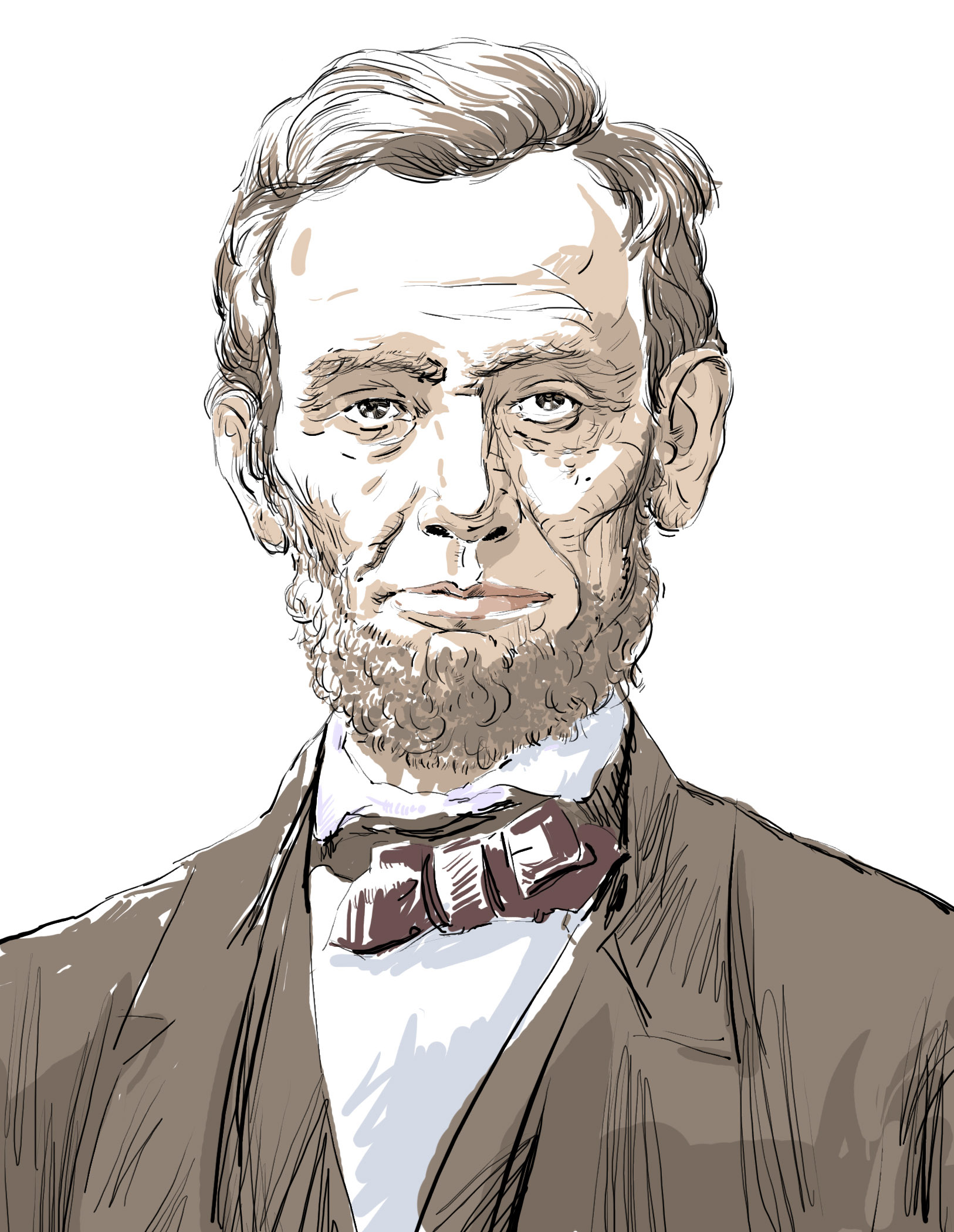
What His Contemporaries Recorded
Lincoln's law partner William Herndon spent decades after the assassination interviewing everyone who had known him, and the resulting body of testimony is extraordinary. The word that recurs, from person after person, is melancholy. Herndon wrote that it dripped from him as he walked.
People described him sitting silent for hours, staring at nothing. They described a man who told jokes constantly — Lincoln was genuinely, professionally funny — and whose friends understood the jokes as a working tool for keeping himself upright.
Two crises are documented in detail. In 1835, after the death of Ann Rutledge, Lincoln's friends became sufficiently alarmed that they watched him and, by several accounts, removed knives and razors from his reach. In January 1841, after breaking his engagement to Mary Todd, he collapsed again; he missed weeks of the legislative session, and his friend Joshua Speed took him to Kentucky to recover.
Lincoln's own words from that period are as plain as anything in the record: he wrote that he was the most miserable man living, that if his feeling were distributed equally to the whole human family there would not be one cheerful face on earth, and that he did not know whether he would ever be better.
Why This Is Depression, Not Bipolar Disorder
The distinction matters and the evidence is unusually clear.
Bipolar disorder requires episodes of mania or hypomania: elevated or irritable mood, inflated self-esteem, decreased need for sleep, racing thoughts, and impulsive or reckless behaviour, sustained over days.
Lincoln's record contains essentially none of this. Nobody described him as elevated, expansive or grandiose. Nobody described sleepless bursts of frenzied activity, impulsive spending, or reckless risk-taking. The consistent picture across hundreds of accounts is of a deliberate, slow-moving, careful, notably patient man — famously so, to the fury of generals and cabinet members who wanted faster decisions.
The historian Joshua Wolf Shenk's study Lincoln's Melancholy examined this evidence comprehensively and concluded that Lincoln had chronic depression, and we think that conclusion is well founded.
He also had ample external cause. His mother died when he was nine. His sister died in childbirth. Three of his four sons died young, one of them — Willie, aged eleven — in the White House during the war. And he presided over a conflict that killed roughly two per cent of the American population, in the knowledge that he had chosen to prosecute it.
How He Lived With It
What makes Lincoln genuinely valuable to readers here is not the diagnosis but the management, because he did something with his depression that is recognisably modern.
He used humour deliberately and constantly, and said so — he described laughing as the medicine he needed to keep from dying.
He read and recited poetry about mortality, apparently finding it steadying rather than worsening. He wrote his way through problems. He sought out company when he was at his worst rather than isolating. And Shenk's central argument is that Lincoln eventually oriented his suffering toward purpose — that having concluded early in life that he was unlikely ever to be happy, he settled instead on being useful, and on doing something that would make his having lived matter.
He got no treatment worth the name. The available options were mercury-based compounds, which he took for a period and reportedly discontinued because they made him irritable, and which were actively poisonous.
Legacy
Lincoln held the United States together, ended slavery within it, and wrote English prose that has never been surpassed by an American politician. He was assassinated five days after the Confederate surrender, aged fifty-six.
We keep him on this website even though we do not think he had bipolar disorder, because his case makes a point worth making. The idea that Lincoln's depression disqualified him — that a man in that state could not have led — is refuted by the single most consequential presidency in American history. He was not less capable for it. Several historians have argued he was more so: that a man who had already survived his own despair was unusually equipped to hold a country together through four years of catastrophe without being broken by the news each morning.
That is a genuinely useful thing to know if you are depressed and have been told, or have told yourself, that you are not up to what your life requires.
If you recognise yourself in Lincoln's letters, please talk to someone. A doctor, a mental health professional, or a crisis line where you are. He had nothing available to him; you do.
Frequently Asked Questions
Was Abraham Lincoln bipolar?
The evidence points to depression rather than bipolar disorder. Lincoln's severe recurrent depression is exceptionally well documented by contemporaries and in his own letters, but there is essentially no record of manic or hypomanic episodes - no elevated mood, grandiosity, sleeplessness or reckless impulsivity. He was consistently described as deliberate, slow-moving and patient.
What is documented about Lincoln's depression?
Two major crises are well recorded: in 1835 after the death of Ann Rutledge, when friends reportedly removed sharp objects from his reach, and in January 1841 after he broke his engagement to Mary Todd, when he missed weeks of the legislative session. In his own letters he described himself as the most miserable man living.
How did Lincoln cope with depression?
He used humour deliberately, describing laughter as medicine he needed. He read and recited poetry, wrote extensively, and sought out company rather than isolating himself. The historian Joshua Wolf Shenk has argued that he redirected his suffering toward purpose, aiming at usefulness rather than happiness.
Notes & sources
This article draws on the Herndon interviews and papers, Lincoln's own correspondence, contemporary accounts of the 1835 and 1841 crises, and Joshua Wolf Shenk's study Lincoln's Melancholy.