Napoleon slept four hours a night, dictated to multiple secretaries simultaneously, personally drafted a civil code that still underpins the law of dozens of countries, conquered most of Europe, and lost it.
That profile invites psychiatric speculation, and plenty has been offered. It is also the case where retrospective diagnosis is least reliable, for a reason worth stating clearly at the outset: almost everything written about Napoleon in his lifetime was written either by people trying to destroy him or by people he employed.
Quick facts
- Born
- August 15, 1769, Ajaccio, Corsica
- Died
- May 5, 1821, Saint Helena, aged 51
- Known for
- Emperor of the French; the Napoleonic Code; the Napoleonic Wars
- Diagnosis
- None — retrospective, and unusually unreliable in his case
- Problem
- Most contemporary accounts were written by enemies or by propagandists
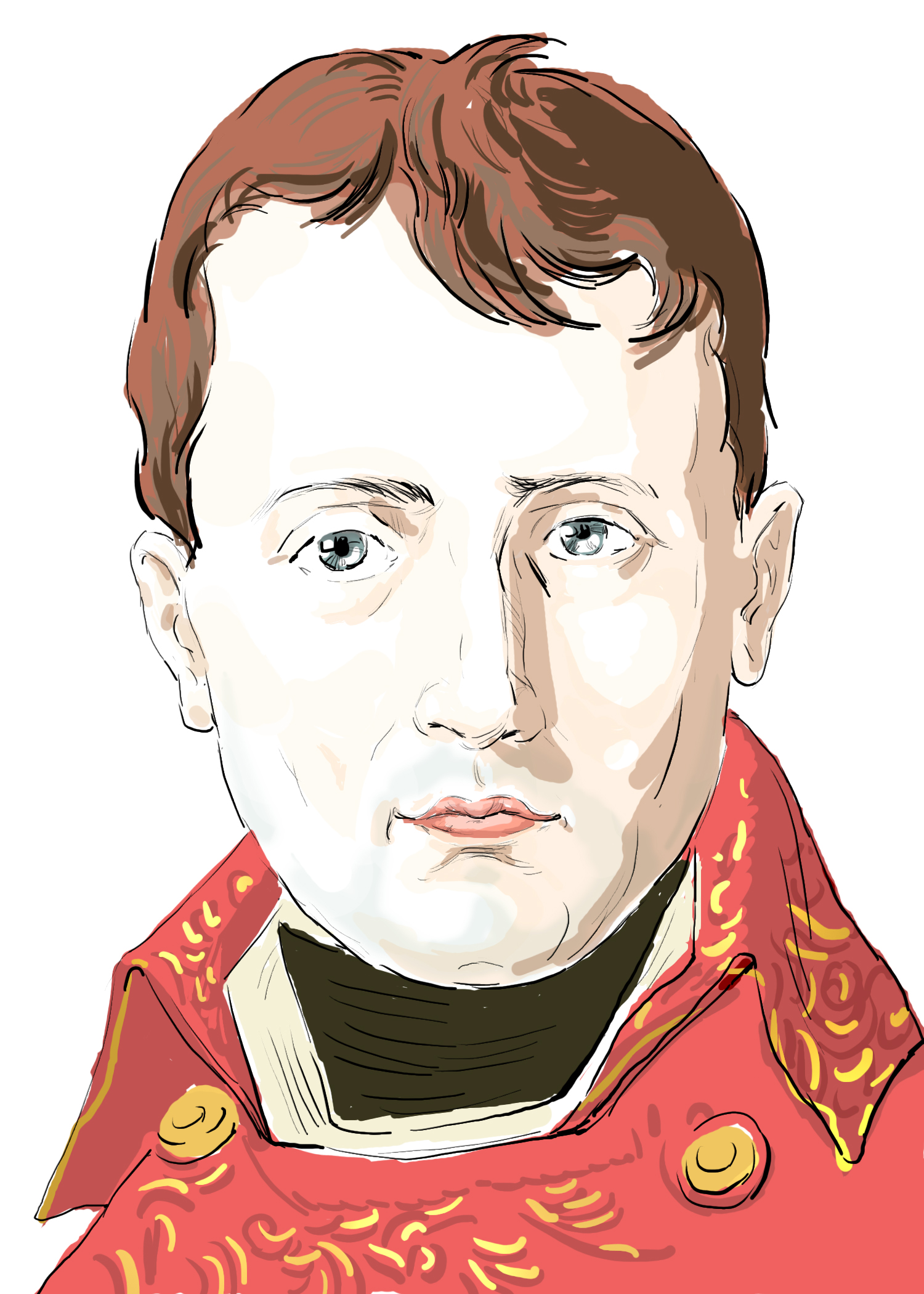
The Elevated Case
The features usually cited are real and well attested.
His capacity for work was extraordinary. He routinely slept four to five hours, worked through the night, and was able to hold enormous quantities of administrative and military detail in mind simultaneously. Secretaries described him dictating on several unrelated subjects in rotation without losing the thread of any.
His self-regard was, by any measure, expansive. He crowned himself emperor. He installed his siblings on the thrones of Europe. He believed, and said, that he was an instrument of destiny.
His risk appetite was immense and repeatedly justified — until it was not. The Russian campaign of 1812, undertaken against a great deal of advice, destroyed an army of over half a million men. The escape from Elba and the Hundred Days in 1815 was a spectacular gamble that ended at Waterloo.
There are also documented periods of the opposite: withdrawal, lethargy, indecision. Contemporaries at Waterloo and during the 1813 campaign described a man who was uncharacteristically slow and disengaged at critical moments.
Why This Case Is Weak
Now the problems, and they are serious.
The sources are compromised. British propaganda spent two decades depicting Napoleon as a deranged Corsican ogre, and much of the material about his supposed rages and instability originates there. His own memoirs, dictated at Saint Helena, were a deliberate exercise in legend-building. The memoirs of his associates were written to settle scores or secure positions under the restored monarchy.
There are excellent physical explanations. Napoleon suffered from chronic and worsening illness in his later campaigns. Painful haemorrhoids are the standard, faintly comic explanation offered for his lethargy at Waterloo, but he also had a bladder condition, recurrent stomach pain, and quite possibly the gastric cancer that killed him at fifty-one. A commander who is slow and disengaged may simply be a commander who is unwell.
The behaviour was situationally rational. Extraordinary energy and grandiosity are, unhelpfully for diagnosis, adaptive traits for someone attempting to conquer Europe. A general who takes large risks and wins is called bold; the same general after Waterloo is called manic. And the periods of despondency have obvious causes: losing an army, losing an empire, and being exiled to a small island in the South Atlantic.
So Was Napoleon Bipolar?
Unknowable, and we would put him among the weakest cases on this website.
What can be said is that Napoleon had a temperament of extraordinary energy, self-belief and risk tolerance, and that he had periods of withdrawal and indecision. Whether that constitutes an illness, a personality, or the ordinary oscillation of a man under two decades of continuous strain cannot be determined from the sources available.
He is included here because he appears on virtually every list, and readers deserve a page that explains why the confident claims they will find elsewhere are not well founded.
Legacy
Napoleon's actual legacy is largely administrative and outlasted the empire completely. The Napoleonic Code reorganised civil law around clarity, equality before the law and secular authority, and remains the foundation of legal systems across Europe, Latin America, Africa and beyond. He reformed education, banking and public administration in ways that survived every subsequent French government.
He also caused the deaths of millions of people, and the tendency of popular history to treat him as a fascinating character rather than the author of a continental catastrophe is worth resisting — particularly on a website about mental health, where the impulse to explain enormous ambition as illness can quietly become a way of excusing its consequences.
Frequently Asked Questions
Was Napoleon bipolar?
It is unknowable, and we regard it as one of the weakest cases commonly claimed. His extraordinary energy, grandiosity and risk-taking are well documented, as are periods of lethargy and indecision, but the contemporary sources are heavily compromised by propaganda and self-interest, and he had serious physical illnesses that explain much of the same behaviour.
Why are historical accounts of Napoleon unreliable?
British wartime propaganda spent two decades portraying him as deranged, and much material about his instability originates there. His own Saint Helena memoirs were an exercise in legend-building, and the memoirs of associates were often written to settle scores or secure favour under the restored monarchy.
What physical illnesses did Napoleon have?
He suffered chronic ill health in his later campaigns, including a bladder condition, painful haemorrhoids, and recurrent stomach pain, quite possibly from the gastric cancer that killed him at 51. These offer straightforward explanations for the lethargy and indecision sometimes read as depressive episodes.
Notes & sources
This article draws on contemporary accounts of Napoleon's working habits and campaigns, modern historical scholarship on the reliability of Napoleonic-era sources, and published research on his physical health and cause of death.