Carrie Fisher did something almost nobody in Hollywood had done before her: she talked about being bipolar the way other people talk about being left-handed. Not as a confession, not as a tragedy, not as a redemption arc — just as a fact about her that happened to be funny, because she was funny about everything.
She was diagnosed at twenty-four, spent decades finding treatment that worked, had electroconvulsive therapy and told everyone about it, and made a one-woman show out of her own medical records. She is, for our money, the most useful figure on this entire website.
Quick facts
- Born
- October 21, 1956, Beverly Hills, California
- Died
- December 27, 2016, Los Angeles, aged 60
- Known for
- Princess Leia in Star Wars; Postcards from the Edge; Wishful Drinking
- Diagnosis
- Bipolar disorder, diagnosed at 24; she accepted it at 28
- Treatment
- Medication and electroconvulsive therapy, which she discussed publicly
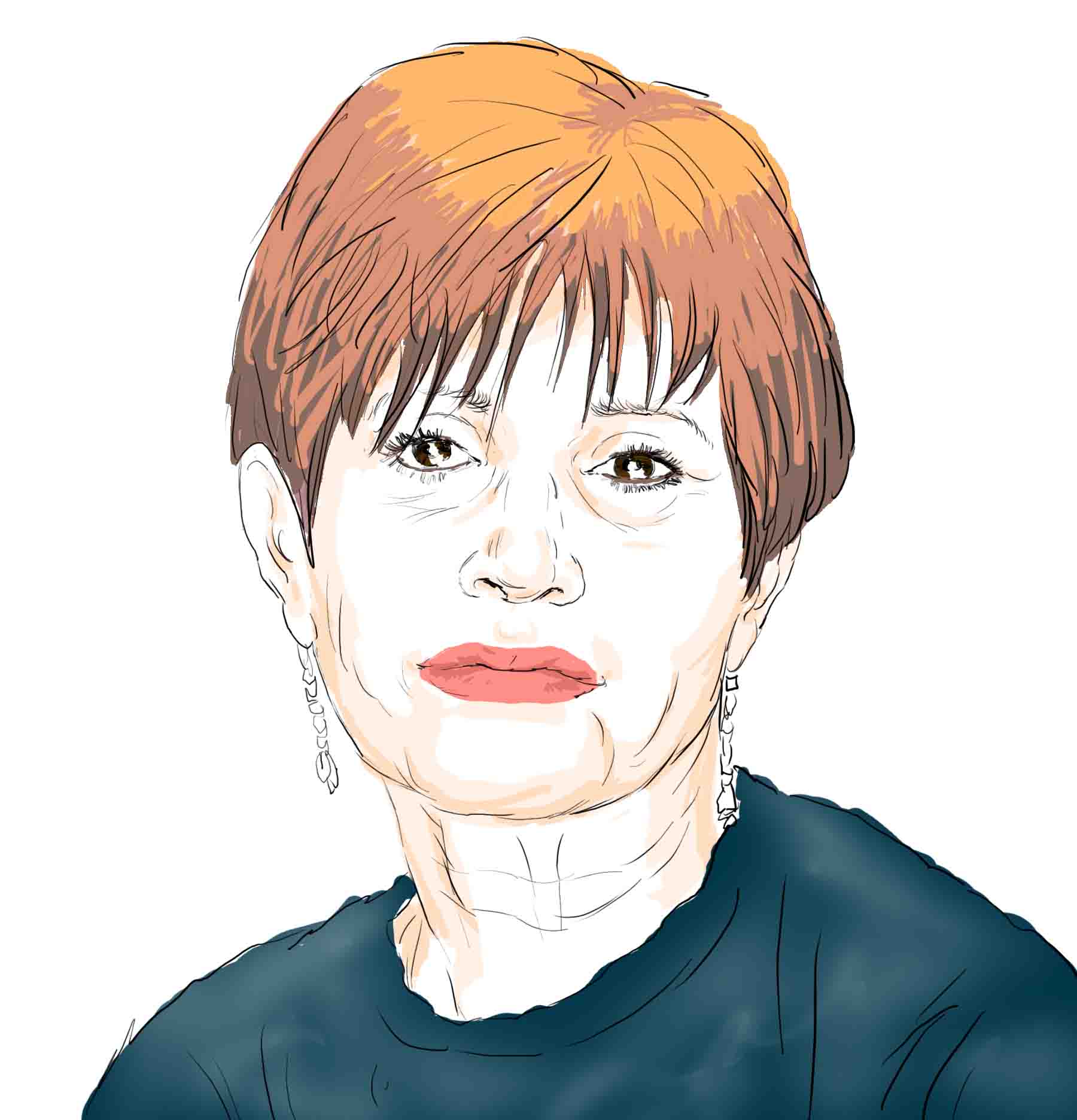
Hollywood Royalty, Badly Managed
Fisher was the daughter of Debbie Reynolds and Eddie Fisher, which meant she was famous before she had done anything. When she was two, her father left her mother for Elizabeth Taylor — also on this website — in one of the great tabloid scandals of the 1950s. Fisher grew up inside a public narrative she had not chosen, and she never entirely got out of one.
She dropped out of high school to appear in her mother's stage show, studied at the Central School of Speech and Drama in London, and made her film debut in Shampoo at seventeen.
Then at nineteen she was cast as Princess Leia.
Leia
Star Wars in 1977 made her one of the most recognisable people on earth, and she was ambivalent about it for the rest of her life — not because she resented the role, which she defended fiercely, but because she resented being frozen at nineteen in other people's imaginations, in a metal bikini she had famously strong opinions about.
She was drinking heavily and using drugs through much of the original trilogy. She was candid later that she had been self-medicating for years before anyone put a name to what she was medicating.
A cocaine overdose in 1985 was the crisis that finally forced the issue.
Diagnosis, and Four Years of Refusing It
Fisher was diagnosed with bipolar disorder at twenty-four. By her own repeated account, she did not accept the diagnosis until she was twenty-eight — four years in which she assumed the doctors were wrong and she was simply a person who felt too much and used too many drugs.
That gap is one of the most useful things she ever talked about, because it is completely typical. Very few people accept a bipolar diagnosis the day they receive it. The elevated states do not feel like illness; they feel like the good part. Fisher described her manic phases in terms most clinical literature never manages — the speed, the wit, the certainty, the sense of being the best version of herself — and she was honest that giving those up was a genuine loss, not a trivial one.
She was diagnosed with bipolar I and described experiencing both the manic and the depressive extremes at full strength. She gave them names. She called her manic self Roy and her depressive self Pam, which is both a joke and a genuinely sophisticated piece of psychological distancing.
Electroconvulsive Therapy
Fisher had electroconvulsive therapy for treatment-resistant depression, and she talked about it publicly and in detail — which almost nobody with her level of fame had ever done.
She was clear about the trade-off: ECT worked for her, and it cost her memory. She described losing chunks of her past, sometimes permanently, and said she kept doing it anyway because the alternative was worse. That is a far more honest account than either side of the ECT argument usually offers.
Modern ECT bears little resemblance to its cultural image — it is administered under general anaesthetic with muscle relaxants, and it remains one of the most effective treatments available for severe depression that has not responded to anything else. Memory effects are real and are the principal drawback. Fisher's public description did more to correct the One Flew Over the Cuckoo's Nest version than any public health campaign managed.
The Books
Fisher's second career was arguably her better one. Postcards from the Edge (1987), her semi-autobiographical novel about an actress in rehab and her movie-star mother, was adapted into a film with Meryl Streep and Shirley MacLaine. She became one of the most in-demand script doctors in Hollywood, quietly rewriting dialogue on films including Hook, Sister Act and The Wedding Singer.
Then came Wishful Drinking — first a one-woman stage show, then a book, then an HBO special — in which she stood on stage and did an hour of comedy about bipolar disorder, addiction, ECT, her parents' marriage, and the man who died in her bed. It is very funny and completely unsentimental, and it is the single best introduction to bipolar disorder we know of for someone who does not want to read a medical book.
The Princess Diarist (2016), drawn from journals she kept at nineteen, was published weeks before her death.
What She Actually Changed
Fisher's advocacy was not a campaign. It was a refusal to be embarrassed, sustained in public for thirty years.
She said repeatedly that she was proud of having survived what she'd survived, that being bipolar was not a moral failing, and that treatment was not a defeat. When a fan wrote to her describing their own bipolar diagnosis and their fear, she wrote back publicly telling them that they were not alone, that the illness could take everything from them if they let it, and that they should stay on their medication.
She was also unusually honest about the cost of the illness in a way that the more inspirational accounts avoid. She talked about lost years, about relationships she'd damaged, about the memory that ECT took. She did not sell it as a superpower.
2016
Fisher suffered a cardiac event on a flight from London to Los Angeles on 23 December 2016 and died four days later, aged sixty. The coroner's findings identified sleep apnoea and other factors, and noted several drugs in her system.
Her mother Debbie Reynolds died the following day.
Her daughter Billie Lourd, and Fisher's own stated wishes, produced one of the most Carrie Fisher things imaginable: her ashes were interred in an urn shaped like a giant Prozac capsule, an object she had owned and loved for years.
Legacy
Leia is permanent, and Fisher's later performances in the sequel trilogy gave the character an ending on her own terms.
But the reason she matters here is simpler. Before Carrie Fisher, the public script for a famous person with bipolar disorder was tragedy or silence. She wrote a third option: talk about it constantly, be funny about it, be honest about the parts that are not funny, take your medication, and refuse absolutely to be ashamed.
If you have just been diagnosed and you are not ready for a clinical book, read Wishful Drinking first. It will make you laugh, and it will make the thing seem survivable, because she is standing right there having survived it.
Frequently Asked Questions
Was Carrie Fisher bipolar?
Yes. She was diagnosed with bipolar disorder at twenty-four and spoke about it publicly for the rest of her life. She has said she did not accept the diagnosis until she was twenty-eight.
Did Carrie Fisher have electroconvulsive therapy?
Yes, and she discussed it openly. She said ECT was effective for her severe depression but caused significant memory loss, and that she continued with it because the alternative was worse.
How did Carrie Fisher die?
She suffered a cardiac event on a flight from London to Los Angeles on 23 December 2016 and died four days later, aged 60. The coroner identified sleep apnoea among contributing factors. Her mother, Debbie Reynolds, died the following day.
Notes & sources
This article draws on Carrie Fisher's own memoirs and stage work, particularly Wishful Drinking, on interviews she gave over three decades about her diagnosis and treatment, and on reporting of the coroner's findings following her death.