Jim Carrey has talked about depression more openly, and stranger, than almost any comedian alive — in a 60 Minutes interview about Prozac, in interviews about spiritual crisis, and in a novel about a fictionalised version of himself.
He has never said he has bipolar disorder. He appears on bipolar lists constantly, and the reason appears to be simply that he is extremely animated on screen.
Quick facts
- Born
- James Eugene Carrey, January 17, 1962, Newmarket, Ontario
- Known for
- Ace Ventura, The Mask, The Truman Show, Eternal Sunshine of the Spotless Mind
- Diagnosis
- None reported — he has discussed depression, not bipolar disorder
- Treatment
- Has spoken about taking Prozac and later coming off it
- Childhood
- His family lived in a van and a tent for a period during his teens
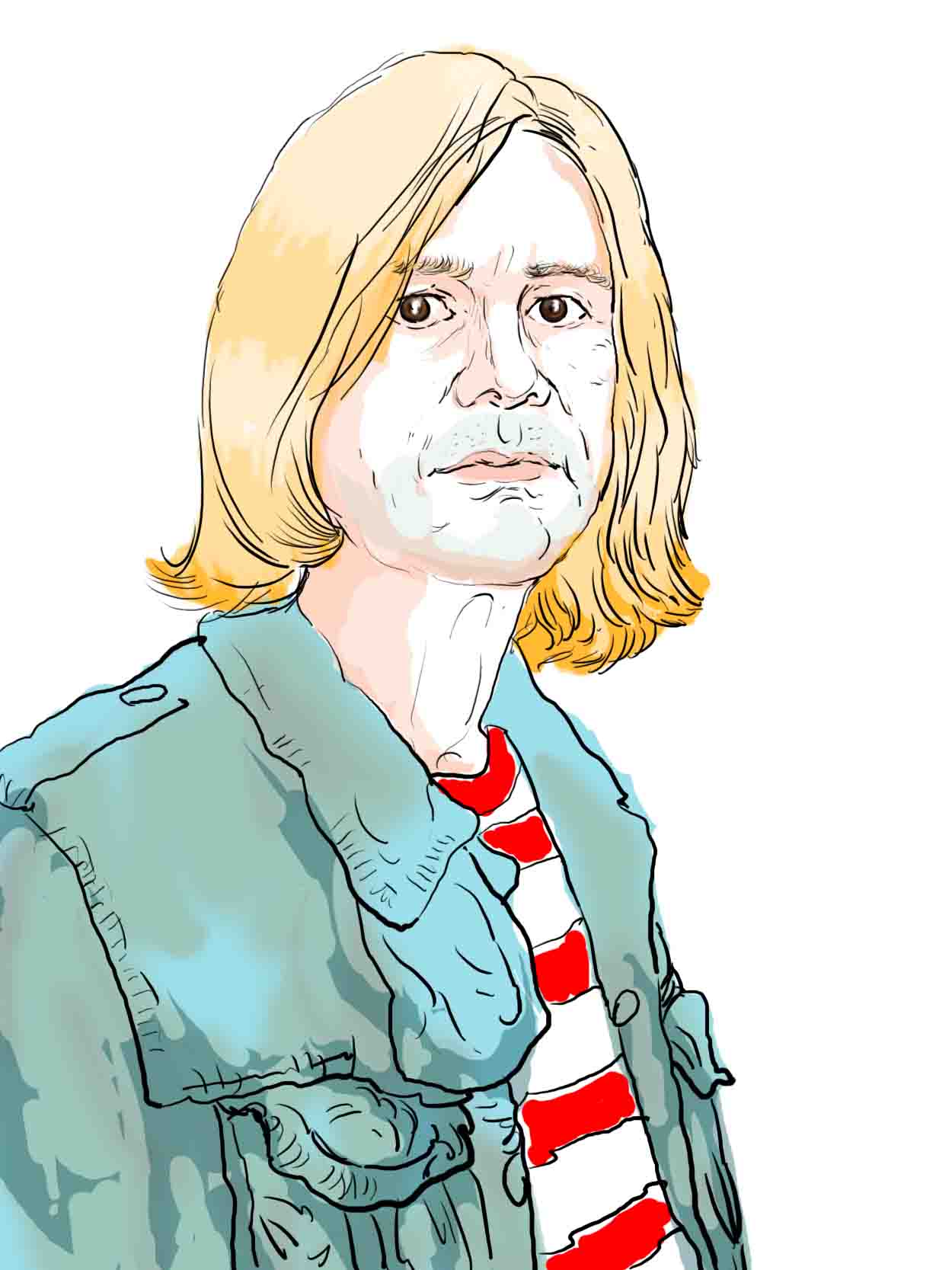
The Van
Carrey grew up in Ontario, the youngest of four. His father Percy was a musician who took an accounting job for security and then lost it, and the family's circumstances collapsed.
For a period in his teens, the whole family worked as janitors and security guards at a tyre factory, with Jim doing eight-hour shifts after school. They lived in a camper van, and for a time in a tent on a relative's lawn. He dropped out of school at sixteen.
He has described his early comedy as a direct response to this — performing to distract his mother, who was chronically ill and in pain, and building a personality out of the ability to make a suffering room laugh.
The Biggest Comedy Star in the World
After years in Toronto and Los Angeles clubs and a run on In Living Color, 1994 happened: Ace Ventura, The Mask and Dumb and Dumber in a single year. He became the first actor to command twenty million dollars a film.
He then did something commercially reckless and artistically vindicated: The Truman Show (1998), Man on the Moon (1999) and Eternal Sunshine of the Spotless Mind (2004), which are among the finest performances of their decade and none of which are comedies in any straightforward sense. He won two Golden Globes and was not nominated for an Academy Award, which remains one of the more conspicuous oversights in Oscar history.
What He Has Said
Carrey discussed his depression publicly in a 2004 interview on 60 Minutes, saying he had taken Prozac for a period and had come off it, and describing his depressive states in terms of exhaustion — a body and mind worn out, needing rest, rather than sadness in the ordinary sense.
He has since spoken repeatedly about periods of depression across his life, and has talked about managing it through diet, exercise, spiritual practice and painting rather than long-term medication.
In the years around 2017 he gave a series of interviews that many viewers found alarming, in which he talked about the non-existence of the self and appeared to be dismantling his own public persona in real time. Some read this as a mental health crisis; Carrey has consistently framed it as a philosophical position arrived at deliberately. He has also spoken about grief and about the depression that followed the death of his partner Cathriona White in 2015 and the litigation that followed.
He published Memoirs and Misinformation in 2020, a novel about a fictional Jim Carrey, which is among other things an extended examination of celebrity and dissolution.
So Is Jim Carrey Bipolar?
There is no evidence for it, and the inference behind the listing is a poor one.
Carrey has described depression. He has described taking an antidepressant. He has not described mania, hypomania, mood stabilisers, or a bipolar diagnosis. Notably, antidepressant monotherapy is generally avoided in bipolar disorder because it can precipitate mania — so his reported treatment history, such as it is, points away from the diagnosis rather than toward it.
The reason he ends up on these lists is almost certainly his performance style: the rubber face, the physical mania of the mid-nineties films. That is a craft honed over a decade in comedy clubs. It is not a symptom, and treating it as one is the same error that put Robin Williams on this list.
Legacy
Carrey changed what a comic lead could be paid and what a comic lead could attempt, and the dramatic performances have aged into something close to canonical.
His actual contribution to the mental health conversation is real but is about depression, not bipolar disorder: a very famous man saying, on network television in 2004, that he had been depressed and had taken medication for it. That was not a common thing for a movie star to say at the time, and it mattered.
Frequently Asked Questions
Is Jim Carrey bipolar?
There is no evidence that he is. He has spoken openly about depression and about taking Prozac for a period, but has never reported a bipolar diagnosis or described manic or hypomanic episodes. His appearance on bipolar lists appears to stem from his energetic performance style rather than from anything he has said.
What has Jim Carrey said about depression?
He discussed it on 60 Minutes in 2004, saying he had taken Prozac and come off it, and describing depression as a kind of deep exhaustion. He has since spoken about managing it through diet, exercise, spiritual practice and painting rather than long-term medication.
Did Jim Carrey grow up poor?
Yes. After his father lost his job, the family worked as janitors at a tyre factory while Jim attended school, and they lived for a period in a camper van and in a tent. He left school at sixteen.
Notes & sources
This article draws on interviews Jim Carrey has given about depression and medication, including his 2004 60 Minutes interview, and on public biographical information. We have found no statement by Carrey reporting a bipolar diagnosis.