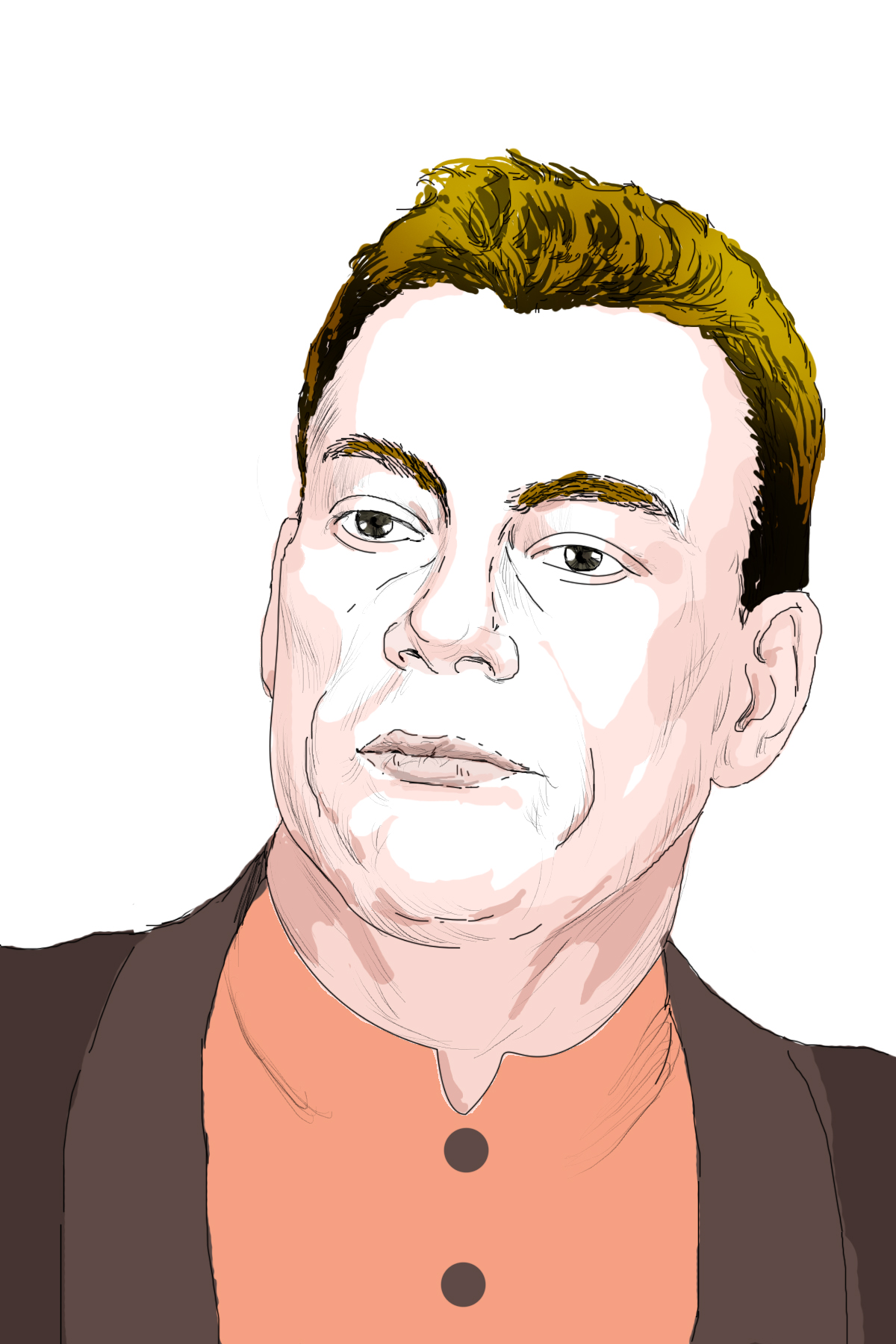
Jean-Claude Van Damme spent the 1990s as one of the biggest action stars in the world and the late 1990s losing it all — to cocaine, to erratic behaviour, to a reputation that made him unemployable at the level he had reached.
He was subsequently diagnosed with rapid cycling bipolar disorder, and has spoken about it and about the medication that stabilised him with a directness that is rare among action stars and rarer still among men of his generation.
Quick facts
- Born
- Jean-Claude Camille François Van Varenberg, October 18, 1960, Berchem-Sainte-Agathe, Belgium
- Known for
- Bloodsport, Kickboxer, Universal Soldier, JCVD
- Diagnosis
- Rapid cycling bipolar disorder, which he has discussed publicly
- Treatment
- Sodium valproate, which he has credited with stabilising him
- Also
- Long-documented cocaine addiction, since addressed
Belgium
Jean-Claude Van Varenberg was born near Brussels in 1960. He has described himself as a weak and anxious child; his father enrolled him in Shotokan karate at eleven, and he took to it completely, adding ballet — which he has always insisted is the harder discipline — and bodybuilding, winning the Mr Belgium title.
He moved to the United States in 1982 with almost no English and no contacts, worked as a driver, a bouncer and a carpet layer, and famously got his break by performing a kick in front of a producer outside a restaurant.
Bloodsport in 1988 made him a star, and Kickboxer, Double Impact, Universal Soldier, Timecop and Hard Target followed through the most commercially successful action decade of his life.
The Fall
By the mid-1990s his behaviour was making him difficult to work with, and his cocaine use had become severe — he has spoken about spending very large sums on it and about using it daily.
The other element, less discussed at the time, was the mood instability. He has described periods of towering energy and confidence followed by collapses into depression so severe he could not leave a room, cycling far faster than the standard picture of bipolar disorder suggests.
His marriages were tumultuous and heavily reported. His career slid from theatrical releases to direct-to-video work over the course of a few years.
Rapid Cycling
Van Damme has said he was diagnosed with rapid cycling bipolar disorder and treated with sodium valproate, a mood stabiliser also used as an anticonvulsant.
Rapid cycling is worth explaining, because it is frequently misunderstood. It describes a course of bipolar disorder in which someone experiences four or more distinct mood episodes within a twelve-month period. It is not a separate illness but a specifier — a description of how often the episodes come. It is associated with a more difficult treatment course, is more common in bipolar II, and is one of the situations where antidepressants alone can make things distinctly worse.
He has credited the medication with returning him to a functional life, and has described the difference in stark terms — from a man who could not predict his own state from one week to the next to someone able to plan, work and maintain relationships.
He has also been open about the cocaine, and about the fact that the two problems were tangled together in a way that made either hard to treat alone. That is the norm rather than the exception: substance use disorders occur in a large proportion of people with bipolar disorder, and treating one while ignoring the other rarely works.
JCVD and After
In 2008 Van Damme did something no one expected: he starred in JCVD, a French-language film in which he plays a washed-up version of himself, and delivered a lengthy monologue direct to camera about his failures, his drug use and his regrets.
The reviews were startled and enthusiastic. Several major critics said it was the best acting of his career and that it would have been in awards conversation had it come from anyone else. It reframed him permanently — not as a punchline but as someone capable of genuine self-examination in public.
He has worked steadily since, in The Expendables 2, in the comedy series Jean-Claude Van Johnson, and in a continuing run of action films, and has become a more consciously public advocate for the idea that men in his industry should talk about mental health.
Legacy
Van Damme's place in action cinema is secure, and the martial arts community has always taken him more seriously than the wider critical establishment did.
For this website, his value is specific. He is one of very few men in a hyper-masculine corner of entertainment to say plainly that he has a psychiatric diagnosis, name the medication he takes, and credit it with saving his career. The audience that reaches — men who would never pick up a book about bipolar disorder — is one almost nobody else on this site can access.
Frequently Asked Questions
Does Jean-Claude Van Damme have bipolar disorder?
He has said publicly that he was diagnosed with rapid cycling bipolar disorder and treated with sodium valproate, which he credits with stabilising him.
What is rapid cycling bipolar disorder?
Rapid cycling describes a course of bipolar disorder in which someone has four or more distinct mood episodes within twelve months. It is a specifier rather than a separate illness, is associated with a more difficult treatment course, and is a situation where antidepressants given alone can worsen the pattern.
What is the film JCVD about?
A 2008 French-language film in which Van Damme plays a fictionalised, washed-up version of himself. It includes a long monologue direct to camera about his failures and drug use, and was widely praised as the best performance of his career.
Notes & sources
This article draws on interviews Jean-Claude Van Damme has given about his diagnosis, medication and addiction, and on public reporting of his career.