Marilyn Monroe spent her life terrified of going mad, because she had watched it happen to her mother and had been told repeatedly that it was in her blood.
Whether she had bipolar disorder is genuinely unresolved. What is documented is a great deal of psychiatric treatment, a catastrophic hospitalisation in 1961, severe insomnia, barbiturate dependence, and an inherited fear that shaped every decision she made about her own mind.
Quick facts
- Born
- Norma Jeane Mortenson, June 1, 1926, Los Angeles
- Died
- August 4, 1962, Brentwood, Los Angeles, aged 36
- Known for
- Some Like It Hot, Gentlemen Prefer Blondes, The Seven Year Itch
- Diagnosis
- No confirmed bipolar diagnosis; extensive psychiatric treatment documented
- Family history
- Her mother was diagnosed with paranoid schizophrenia and institutionalised
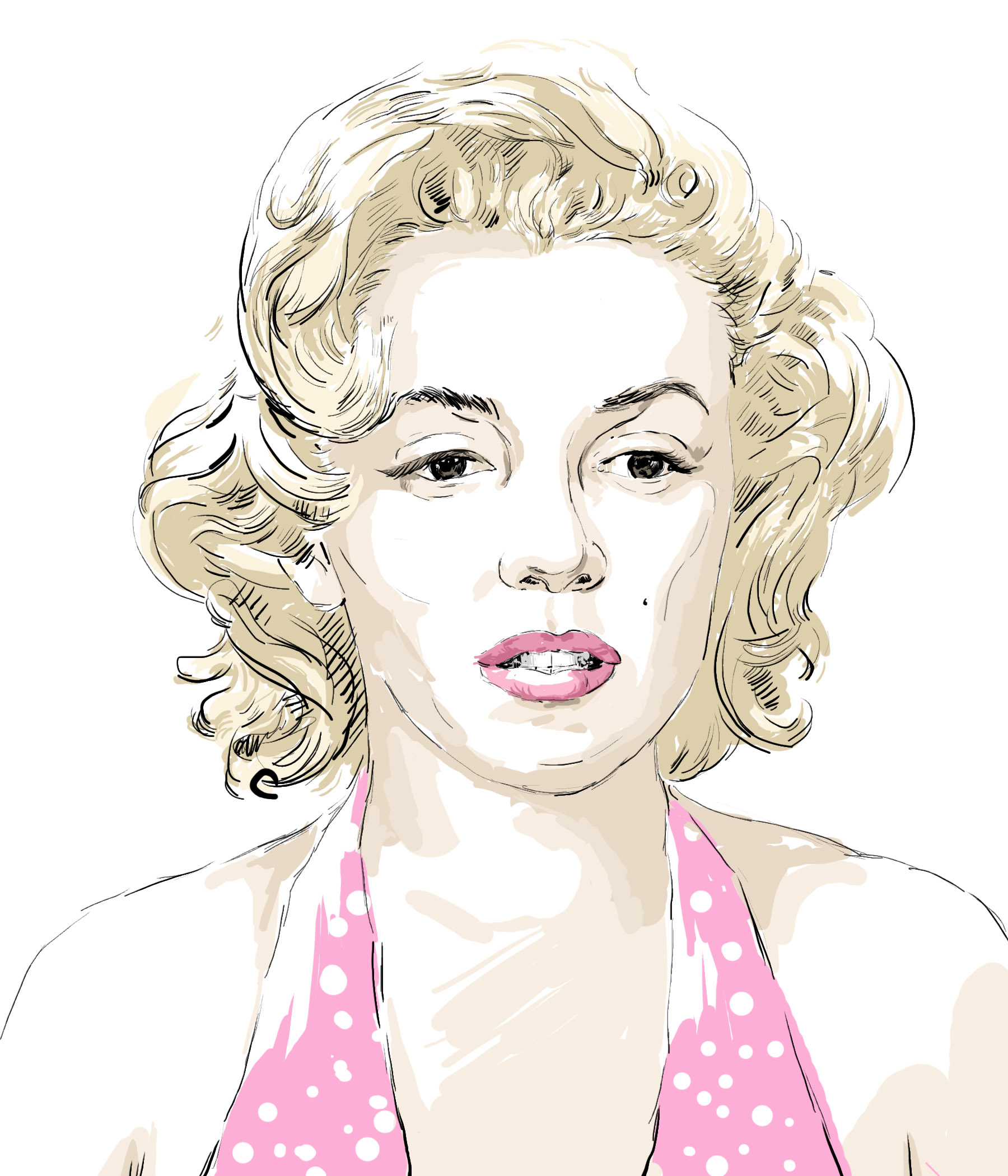
Norma Jeane
Norma Jeane Mortenson was born in Los Angeles in 1926. Her mother Gladys was a film cutter who developed severe mental illness and was diagnosed with paranoid schizophrenia; she spent much of the rest of her life in institutions. Norma Jeane's grandmother had also been institutionalised.
She spent her childhood in a series of foster homes and, for a period, an orphanage. She has described the experience of being told, as a child, what had happened to the women in her family and drawing the obvious conclusion about what was coming for her.
She married at sixteen, was photographed working in a factory during the war, and became a model and then a contract player. By the early 1950s she was the most photographed woman in the world.
What Is Documented
The picture from her working life is consistent across many independent sources.
There was severe, chronic insomnia, which she treated with escalating barbiturates — the standard prescription of the era and a catastrophically bad one, since barbiturates disrupt sleep architecture, are highly addictive, and have a narrow margin between effective and lethal doses.
There was profound performance anxiety. Directors and co-stars described her as unable to come out of her dressing room, requiring dozens of takes for a single line, arriving hours late or not at all — and then producing, on film, something that none of the technically more reliable actors around her could touch.
There were periods of very low mood and at least one apparent overdose before her death, and she was in psychoanalysis for years, latterly under Dr Ralph Greenson, whose involvement in her life became so extensive that it is now considered a serious breach of professional boundaries.
1961
In February 1961, on Greenson's recommendation and after her divorce from Arthur Miller and the death of Clark Gable, Monroe agreed to be admitted for a rest. She was placed in the psychiatric ward of the Payne Whitney Clinic in New York and locked in.
Her account of it, in a long letter to Greenson, is one of the most harrowing documents any patient has left. She described being confined in a padded cell, being told she was a very sick girl, having the window broken by her own hand to attract attention, and being carried by staff. She wrote that she had been treated as though she were insane, and that being treated that way was itself enough to make anyone so.
Joe DiMaggio, her ex-husband, secured her release after several days. She was transferred to a general hospital and stayed several weeks.
Whatever her underlying condition, that episode is a fair summary of what mid-century psychiatry offered a distressed woman: confinement, condescension and no meaningful treatment.
So Was Marilyn Monroe Bipolar?
Unresolved, and we would be cautious.
The case in favour: mood instability, periods of high energy and impulsivity, severe depressive episodes, a strong family history of serious mental illness, and prolonged psychiatric involvement.
The case against, or at least the complications: barbiturate and alcohol dependence alone produce mood swings, unreliability and depression, and she was heavily dependent for years. Her family history was of schizophrenia rather than bipolar disorder. Her lateness and difficulty on set are as well explained by extreme anxiety and perfectionism as by mood elevation — several directors described her as paralysed by fear rather than elevated. And no contemporaneous diagnosis of manic depression has ever been produced.
It is also worth naming something uncomfortable. Monroe was a woman in an industry that had a strong incentive to describe a performer who resisted its demands as unstable. A great deal of what we think we know about her mental state comes from studio executives and directors who found her inconvenient.
August 1962
Monroe was found dead at her Brentwood home on 4 August 1962, aged thirty-six. The cause was recorded as acute barbiturate poisoning and the death classified as a probable suicide.
The conspiracy literature that has grown around this is vast and we are not going to add to it. What is relevant here is more mundane and more useful: she was a woman with serious psychiatric distress and severe insomnia, being prescribed large quantities of barbiturates by multiple doctors who were not adequately coordinating with one another, in an era with no effective treatment for what she may have had and no safeguards on what she was being given.
Lithium had been available since 1949 but was not approved for use in the United States until 1970, eight years after her death.
Legacy
Monroe remains one of the most recognisable images of the twentieth century, and the reassessment of her as a serious comic actor — Some Like It Hot is one of the great comic performances on film — and as an intelligent woman who founded her own production company to escape a punitive studio contract is now well established.
What we take from her, for the purposes of this website, is the fear. Monroe grew up believing madness was her inheritance and that nothing could be done about it, and in her lifetime that belief was more or less accurate. It is not accurate now. A family history raises risk; it does not determine an outcome, and treatment exists.
She was thirty-six, and she was eight years too early.
Frequently Asked Questions
Was Marilyn Monroe bipolar?
It has never been established. She received extensive psychiatric treatment and showed mood instability and severe depression, and she had a strong family history of serious mental illness. However, no contemporaneous diagnosis of manic depression has been produced, her family history was of schizophrenia rather than bipolar disorder, and her long-term barbiturate and alcohol dependence produces a very similar picture on its own.
What happened at the Payne Whitney Clinic?
In February 1961 Monroe agreed to be admitted for rest and was placed in a locked psychiatric ward. She described the experience in a long letter to her analyst as terrifying and dehumanising, including being confined in a padded cell. Joe DiMaggio secured her release after several days.
How did Marilyn Monroe die?
She was found dead at her Los Angeles home on 4 August 1962, aged 36. The cause was recorded as acute barbiturate poisoning and the death was classified as a probable suicide.
Notes & sources
This article draws on Monroe's own letters, including her account of the Payne Whitney admission, contemporaneous accounts by directors and colleagues, the coroner's findings, and biographical scholarship. No confirmed psychiatric diagnosis of Monroe exists.