For eighteen months at the start of the 1980s, Adam Ant was the biggest pop star in Britain — three number one singles, a Regency-highwayman costume that defined an era, and a run of chart dominance that few acts have matched.
Two decades later he was detained under the Mental Health Act after an incident in a north London pub, and became one of the first British pop stars of his generation to write in detail about a bipolar diagnosis. He is also, unlike several people on this website, still here and still touring.
Quick facts
- Born
- Stuart Leslie Goddard, November 3, 1954, London
- Known for
- Adam and the Ants; "Stand and Deliver", "Prince Charming", "Goody Two Shoes"
- Diagnosis
- Bipolar disorder, discussed openly by Adam Ant himself
- Key event
- Sectioned under the UK Mental Health Act in 2002
- Memoir
- Stand and Deliver (2006), which covers the illness in detail
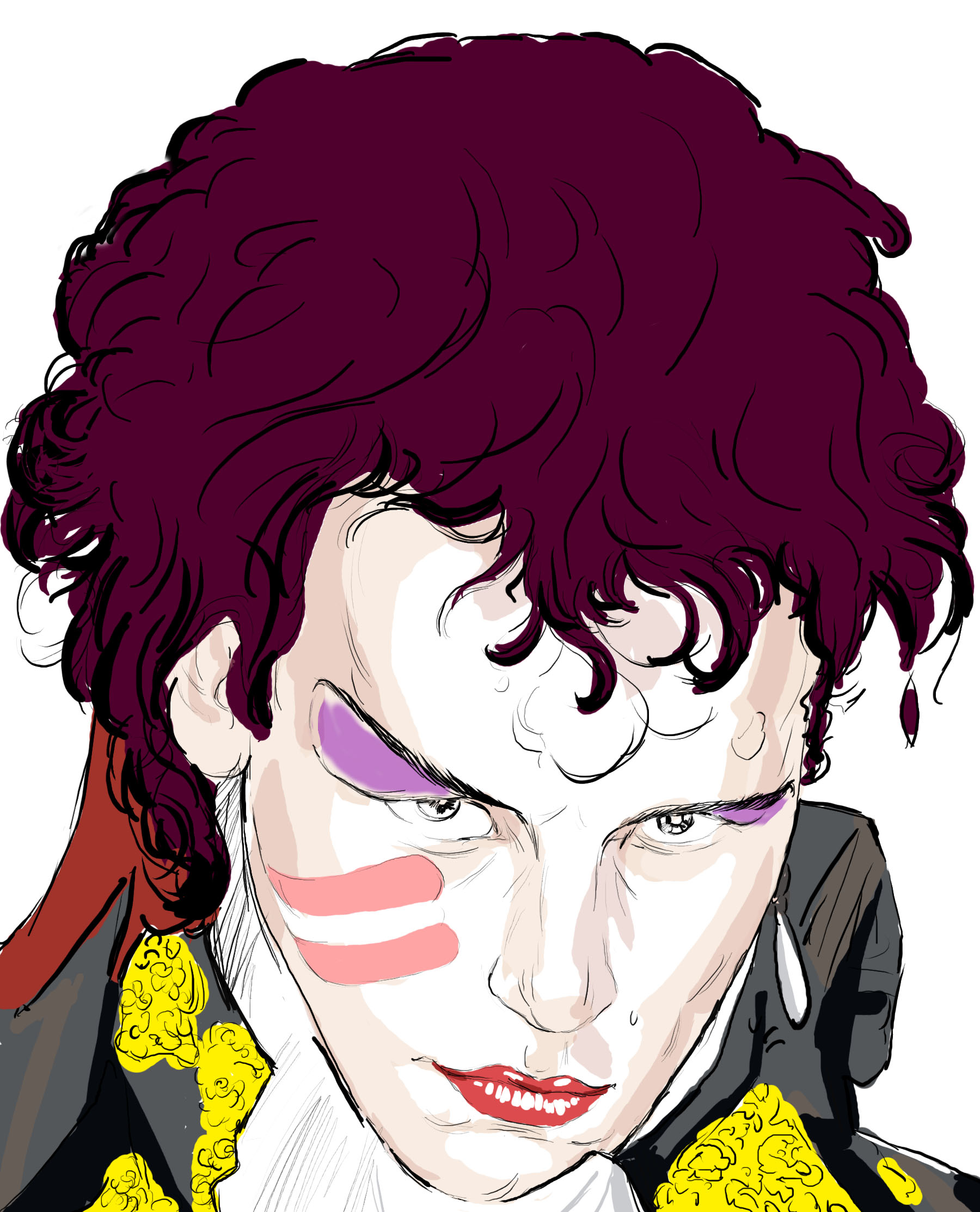
Stuart Goddard
Stuart Leslie Goddard was born in London in November 1954. His parents separated when he was young, and he has described a childhood shaped by that instability. He studied graphic design at Hornsey College of Art — an origin that shows in how completely he later controlled his own visual presentation.
He attempted suicide in his early twenties, before the fame, and has said the period afterwards is when he adopted the name Adam Ant and effectively rebuilt himself as someone else. That detail matters to the shape of everything that followed: the illness was present long before the career was.
Antmusic
Adam and the Ants emerged from the London punk scene in 1977, then reinvented themselves entirely with the 1980 album Kings of the Wild Frontier — twin drummers, Burundi rhythms, pirate and highwayman imagery, and a visual identity that Goddard designed himself.
What followed was an extraordinary run: "Stand and Deliver" and "Prince Charming" both entered the UK chart at number one, and as a solo artist "Goody Two Shoes" did the same in 1982. For a period he was inescapable in Britain.
Then it receded, as pop always does. He moved to Los Angeles and pursued acting through the later 1980s and 1990s with modest success, and the music career never regained its former altitude.
2002
In January 2002, Adam Ant entered a pub in Camden and, during an altercation, threatened people with an imitation firearm; he then broke a window at a neighbour's property. He was arrested and, rather than being straightforwardly prosecuted, was detained under the Mental Health Act and admitted to psychiatric hospital.
He has been open since about what preceded it: an escalating manic episode, months of sleeplessness, grandiose plans, and a conviction that nothing was wrong with him. He spent months as an inpatient, initially detained, and later described the experience of hospitalisation in considerable detail — including the humiliation of it, and the eventual relief.
The 2002 incident was widely covered by the British tabloid press in a register that has not aged well. Reading that coverage now against his own account is a useful demonstration of how differently the same events read once you know what you are looking at.
Treatment, and the Long Road Back
Adam Ant's account of the years afterwards is notably unsentimental. He has talked about the weight gain that came with medication, about the flattening effect it had on his energy and drive, and about the difficulty of finding a regime that controlled the illness without erasing the person — all of which took years rather than months.
He published Stand and Deliver in 2006, which deals with the bipolar diagnosis directly and at length, and he has since spoken about it in interviews and documentaries without treating it as either a tragedy or an inspirational anecdote.
He returned to recording and released Adam Ant Is the Blueblack Hussar in Marrying the Gunner's Daughter in 2013, his first album of new material in seventeen years, and has toured regularly since — including full performances of Kings of the Wild Frontier and Dirk Wears White Søx.
Legacy
Adam Ant's musical legacy is secure: he made two of the most visually and rhythmically distinctive pop records of the 1980s, and their influence runs through a great deal of what came after.
His significance for this website is that his story has an unfashionable shape. There is no dramatic ending. There is a serious mental illness, a public collapse, a compulsory hospital admission, several years of unglamorous adjustment to medication, and then a working life resumed — touring in his seventies, playing the old records to people who are delighted to see him.
That is what treated bipolar disorder actually looks like most of the time, and it is worth putting alongside the shorter, louder stories elsewhere on this site.
Frequently Asked Questions
Does Adam Ant have bipolar disorder?
Yes. Adam Ant has spoken openly about his bipolar disorder diagnosis, including in his 2006 memoir Stand and Deliver and in numerous interviews and documentaries since.
What happened to Adam Ant in 2002?
In January 2002 he was involved in an incident at a Camden pub during a manic episode, and was subsequently detained under the UK Mental Health Act and admitted to psychiatric hospital, where he remained for several months.
Is Adam Ant still performing?
Yes. He returned to recording with a new album in 2013 and has toured regularly since, including full album performances of his early records.
Notes & sources
This article draws on Adam Ant's memoir Stand and Deliver, interviews he has given about his diagnosis and hospitalisation, and contemporaneous reporting of the January 2002 incident and his detention under the Mental Health Act.