In four years of recorded output, Jimi Hendrix changed the electric guitar more than anyone before or since. In the same four years, people around him watched a gentle, almost painfully shy young man transform without warning into someone volatile and unrecognisable, then retreat into silence for days.
Hendrix was never diagnosed with bipolar disorder. He died in 1970, before the modern diagnostic criteria existed and long before anyone would have thought to look. But the pattern that friends, bandmates and biographers describe — towering creative energy, sleepless recording marathons, sudden rage, and crashes into withdrawal — is why his name appears on almost every list of famous people who may have lived with the condition.
Quick facts
- Born
- Johnny Allen Hendrix, November 27, 1942, Seattle, Washington
- Died
- September 18, 1970, London, aged 27
- Known for
- Are You Experienced, Woodstock, and redefining what a guitar could do
- Diagnosis
- None — no formal diagnosis exists; retrospective speculation only
- Why he's listed
- Documented mood swings, manic creative bursts, and periods of deep withdrawal
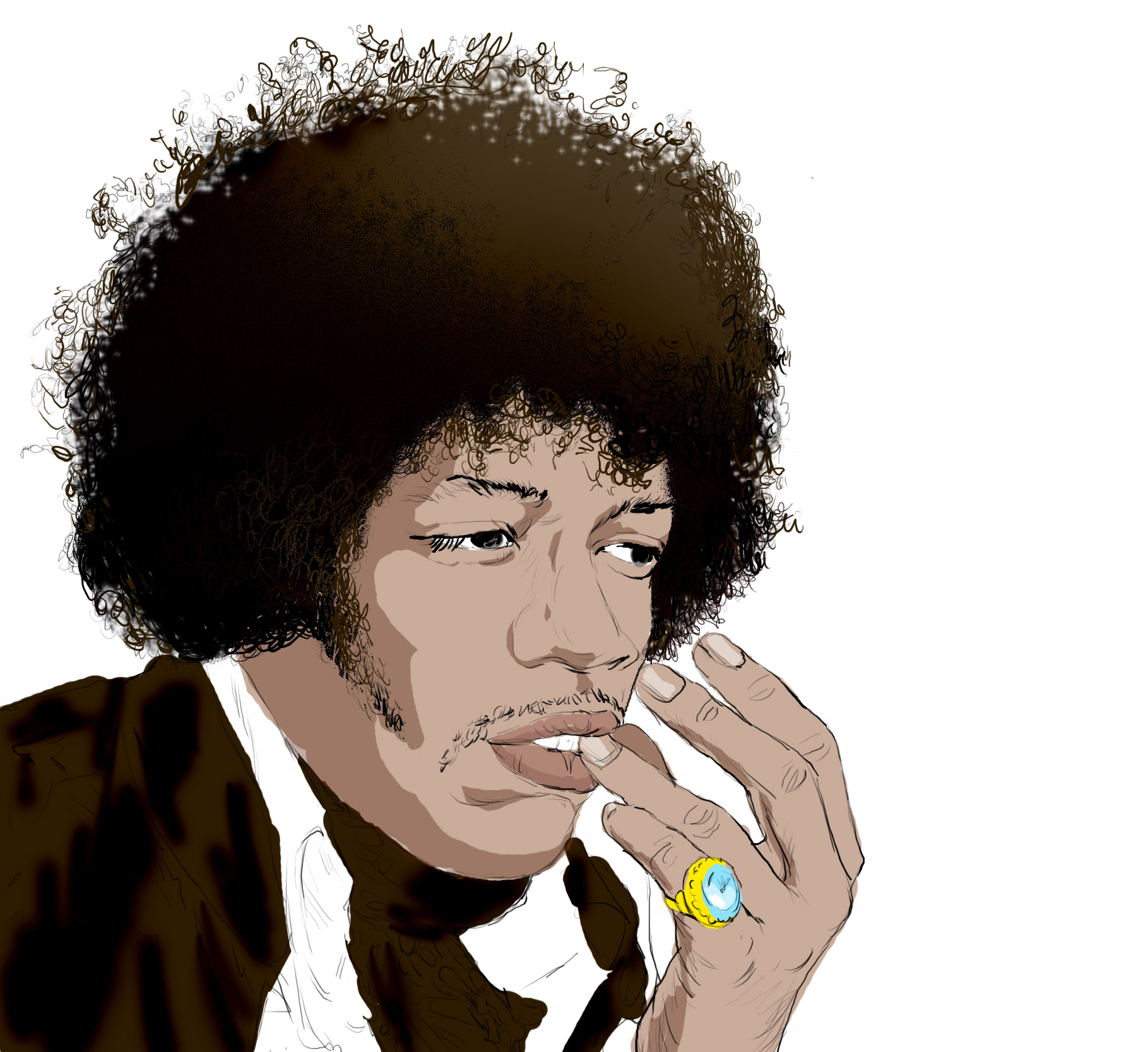
A Childhood of Instability
Johnny Allen Hendrix was born in Seattle in November 1942, while his father Al was serving in the army. His mother Lucille was seventeen. When Al returned in 1945 he renamed the boy James Marshall Hendrix — and found a marriage already collapsing under poverty and alcohol.
Jimi's childhood was defined by movement and loss. He was shuttled between relatives and family friends, sometimes for months at a time. Lucille died in 1958, when Jimi was fifteen; his father refused to let him attend the funeral, handing him a shot of whiskey instead and telling him that was how men grieved. Jimi rarely spoke about her afterwards, though friends noticed that he wrote about her obliquely for the rest of his life.
The guitar arrived as compensation for all of it. He carried a broom around the house imitating one long before he owned an instrument, then played a one-string ukulele, then a five-dollar acoustic. By his teens he was practising obsessively, for hours that stretched into entire days — the first appearance of a pattern that would define him.
Four Years That Rewrote the Guitar
After a short and unhappy stint as an army paratrooper, Hendrix spent the early sixties on the American R&B circuit, backing Little Richard, the Isley Brothers and others. He was a sideman with a reputation for playing too loud and too wild for the job.
In 1966 Chas Chandler of The Animals saw him in a New York club and brought him to London. Within months, the Jimi Hendrix Experience had British rock royalty standing at the back of clubs looking stunned. Are You Experienced arrived in 1967, followed by Axis: Bold as Love the same year and the double album Electric Ladyland in 1968. Monterey, then Woodstock, made him a global figure.
Three landmark albums in roughly eighteen months is an extraordinary rate of output by any measure. Engineers who worked with him described sessions that ran all night and into the following day, with Hendrix unwilling to stop, endlessly re-recording, chasing sounds nobody else could hear yet. That capacity for sustained, near-sleepless creative drive is one of the reasons his name recurs in discussions of bipolar disorder — though it is worth saying plainly that intense work habits alone prove nothing.
The Two Jimis
What did strike almost everyone who knew him was the contrast between the two versions of the man.
The Jimi most people met was soft-spoken to the point of inaudibility, courteous, self-deprecating, often unable to make eye contact in interviews. The other Jimi appeared with little warning — usually, though not always, with alcohol involved — and was aggressive, destructive and frightening to people who loved him. He smashed hotel rooms and, on more than one documented occasion, turned violence on partners. Afterwards came remorse, and often days of withdrawal in which he would barely speak to anyone.
Biographers have repeatedly reached for the language of mood disorder to describe this. So have some of the musicians who worked with him. But it is genuinely difficult to separate the threads: Hendrix was also drinking heavily, using LSD and amphetamines, sleeping erratically, and being worked relentlessly by a management structure that treated him as a machine. Any of those things can produce mood instability on its own. All of them together certainly can.
So Was Jimi Hendrix Bipolar?
The honest answer is that nobody knows, and nobody now can.
There is no medical record of a bipolar diagnosis. Hendrix never sought psychiatric treatment. Every claim about his mental health is a retrospective reading of anecdotes, and retrospective diagnosis of the dead is a notoriously unreliable exercise — historians have confidently assigned bipolar disorder to figures whose surviving evidence would support half a dozen other explanations equally well.
What can be said fairly is this. The features people point to — extended periods of elevated energy and reduced sleep, torrential creative output, irritability and aggression that seemed out of character, followed by withdrawal and flatness — do map onto the shape of bipolar disorder. They also map onto heavy substance use, chronic exhaustion, unresolved childhood trauma, and the pressure of becoming the most famous guitarist alive at twenty-four. In real lives these things rarely arrive one at a time.
We include Hendrix here because the question is asked so often and deserves a straight answer rather than a confident myth.
London, September 1970
Hendrix died in London on 18 September 1970, aged twenty-seven. The inquest recorded that he had taken barbiturate sleeping tablets and died from the consequences; the coroner returned an open verdict, unable to determine intent.
That open verdict is important, and it is routinely overwritten by people who want a neater story. There is no evidence establishing that Hendrix intended to end his life. Friends described him in the preceding weeks as exhausted and frustrated with his management and his direction, but also as making plans. The most cited account suggests he was simply unfamiliar with the strength of the tablets he took.
What is not in doubt is that he had been running on empty for years, and that nobody around him intervened.
Legacy
Fifty-five years on, Hendrix remains the reference point. Rolling Stone has repeatedly named him the greatest guitarist of all time, and the techniques he improvised — controlled feedback, the whammy bar as an expressive instrument, wah as a voice rather than an effect — are now simply how the instrument is played.
For readers of this site, there is a harder legacy worth naming. Hendrix was a young man carrying grief, instability and possible mental illness, surrounded by an industry with every financial reason not to ask whether he was alright. He got four years. The people in this gallery who lived long lives — Stephen Fry, Patty Duke, Kay Redfield Jamison — are almost without exception the ones who eventually got assessment and treatment. That contrast is the whole argument for asking the question early.
Frequently Asked Questions
Was Jimi Hendrix diagnosed with bipolar disorder?
No. Hendrix was never formally diagnosed with bipolar disorder or any other psychiatric condition. He died in 1970 without ever having sought psychiatric assessment. All discussion of bipolar disorder in his case is retrospective speculation based on accounts from friends, bandmates and biographers.
Why do people think Jimi Hendrix was bipolar?
Those who knew him described a striking contrast between his gentle, shy public manner and sudden episodes of aggression and destructiveness, along with extraordinary bursts of creative output, sleepless recording sessions, and periods of withdrawal. Those patterns resemble bipolar disorder, but they also overlap with heavy substance use and exhaustion.
How did Jimi Hendrix die?
Hendrix died in London on 18 September 1970 at the age of 27, after taking barbiturate sleeping tablets. The coroner returned an open verdict, meaning intent could not be determined. There is no evidence that his death was intentional.
Notes & sources
This article draws on published Hendrix biographies, contemporaneous interviews with bandmates and studio engineers, and the 1970 coroner's inquest reporting. No medical records relating to Hendrix's mental health exist. Nothing here is a clinical assessment, and any references to bipolar disorder in his case are clearly identified as speculation by others.