In 1973, four years after walking on the Moon, Buzz Aldrin published a memoir in which he described his psychiatric hospitalisation, his depression and his alcoholism.
It is difficult to overstate how far outside the rules that was. NASA astronauts were selected for imperturbability, tested relentlessly for any hint of psychological weakness, and presented to the public as the most capable men alive. Aldrin broke that frame deliberately, and paid for it professionally.
Quick facts
- Born
- Edwin Eugene Aldrin Jr., January 20, 1930, Montclair, New Jersey
- Known for
- Lunar module pilot, Apollo 11; second person to walk on the Moon
- Diagnosis
- Depression and alcoholism, disclosed by Aldrin; not bipolar disorder
- Memoir
- Return to Earth (1973), a landmark disclosure for its era
- Sober since
- 1978
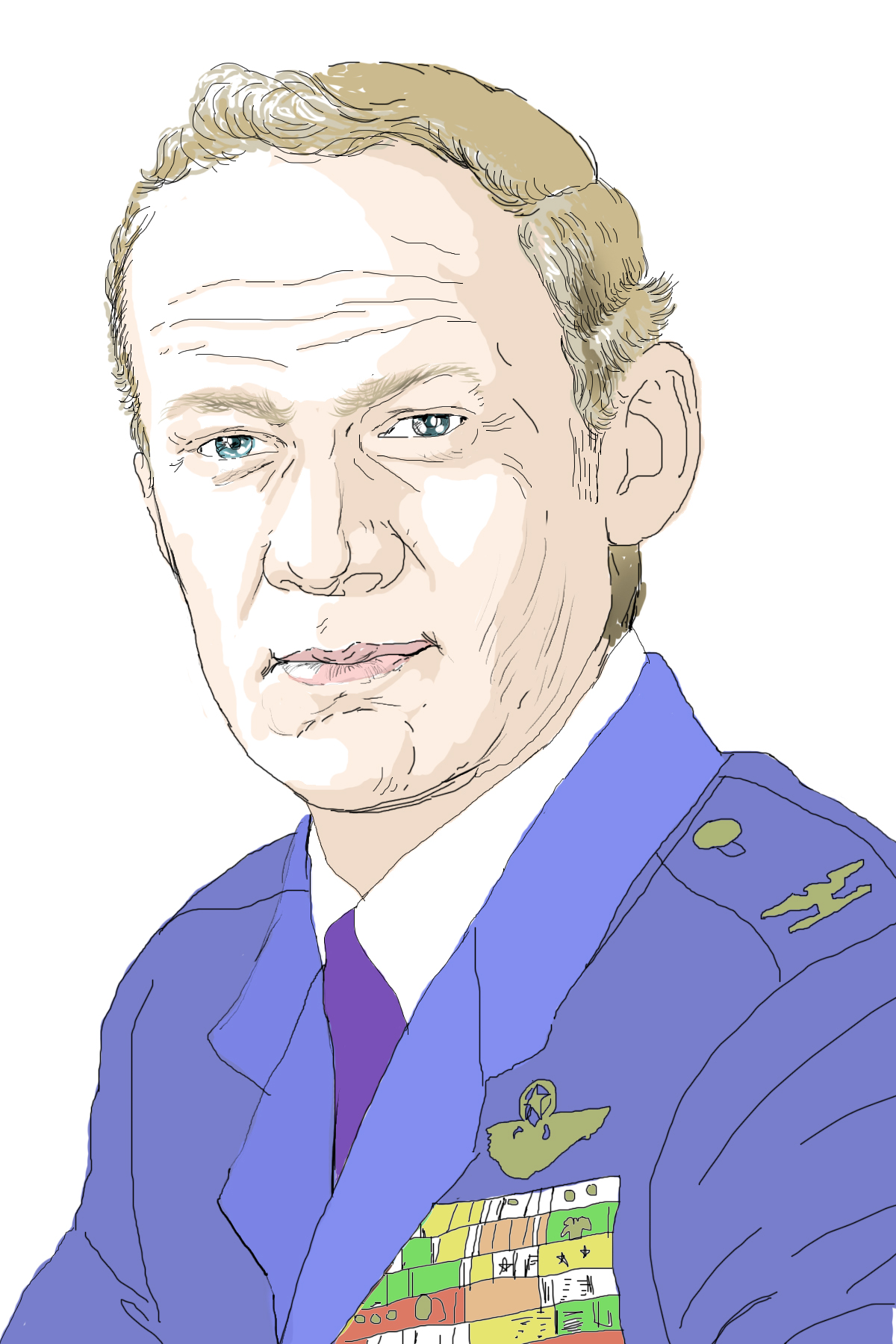
Before and After the Moon
Aldrin was a West Point graduate and flew sixty-six combat missions in Korea. He then did something no astronaut had done: he earned a doctorate at MIT in astronautics, writing a thesis on orbital rendezvous techniques that directly shaped how NASA actually flew the missions. The nickname "Dr. Rendezvous" was not entirely affectionate.
He flew on Gemini 12 in 1966, performing an EVA that finally solved the problem of working outside a spacecraft without exhausting yourself.
On 20 July 1969 he followed Neil Armstrong onto the surface of the Moon.
And then he was thirty-nine, and the defining event of his life was behind him. He has written with unusual honesty about what followed: the absence of any goal capable of following that one, the endless ceremonial touring, and the sense of having become a symbol rather than a person.
The Descent
Aldrin's family history is relevant and he has discussed it: his mother, whose maiden name was Moon, died by suicide the year before Apollo 11, and his grandfather had also died by suicide.
After leaving NASA he took command of the Air Force Test Pilot School, a post he was not well suited to, and his drinking escalated. His first marriage ended. He was hospitalised for depression, and has described periods of being unable to get out of bed.
He has been clear that the alcoholism and the depression were entangled, and that the drinking was the more immediately destructive of the two.
He got sober in 1978 and has remained so.
Return to Earth
Return to Earth appeared in 1973 and told all of this plainly.
The context matters. The astronaut corps operated on an unspoken rule that you never admitted to any problem, because admitting to a problem meant losing your flight status. NASA's psychological screening was extensive and its purpose was to filter out exactly the traits Aldrin was now publicly claiming.
He has said the reaction within the aerospace community was cold, and that he believed it cost him professionally. He also kept talking about it, for the following fifty years.
Is Buzz Aldrin Bipolar?
He is widely listed as such, and we do not think that is accurate.
What Aldrin has consistently described is clinical depression and alcoholism. He has spoken about hospitalisation, about therapy, about medication for depression, and about recovery from alcohol.
What he has not described is manic or hypomanic episodes — no periods of elevated mood, grandiosity, sleeplessness or impulsive risk-taking presented as illness. His account is of low periods and drinking, not of a mood cycle.
As elsewhere on this site, we would rather report what someone said than upgrade it. Depression that hospitalises a man who has walked on the Moon is a serious enough story on its own.
Legacy
Aldrin is now in his mid-nineties and has spent five decades campaigning for Mars exploration, developing orbital mechanics concepts for interplanetary transport, and remaining a conspicuously combative public presence.
His contribution here is one of precedence. In 1973, a bona fide American hero said publicly that he had been hospitalised for depression and was an alcoholic. Every subsequent disclosure by a public figure in a profession that demands invulnerability — military, aviation, medicine, emergency services — sits downstream of people like him.
He also demonstrated something quieter: he was fully treated, got sober at forty-eight, and then had another fifty years.
Frequently Asked Questions
Is Buzz Aldrin bipolar?
He is widely listed as such, but we can find no basis for it. What Aldrin has consistently described is clinical depression and alcoholism, including psychiatric hospitalisation and treatment. He has not described manic or hypomanic episodes, which a bipolar diagnosis requires.
What did Buzz Aldrin write in Return to Earth?
His 1973 memoir described his psychiatric hospitalisation, his depression and his alcoholism, at a time when astronauts were expected never to admit any psychological difficulty. It was a landmark disclosure and he has said it cost him professionally.
When did Buzz Aldrin get sober?
He has been sober since 1978. He continued to speak publicly about depression and alcoholism for the following five decades.
Notes & sources
This article draws on Buzz Aldrin's memoirs, particularly Return to Earth (1973), and on interviews he has given about depression, alcoholism and recovery.