Sinéad O'Connor told Oprah Winfrey in 2007 that she had bipolar disorder. Years later she said that doctors had told her the diagnosis was wrong, and that what she actually had was complex post-traumatic stress disorder arising from childhood abuse.
Both statements were true when she made them, and that is precisely why her story belongs here. She is the case on this website that most directly challenges the idea that a diagnosis is a fixed fact about a person rather than a working description that can be revised.
Quick facts
- Born
- December 8, 1966, Glenageary, County Dublin
- Died
- July 26, 2023, London, aged 56
- Known for
- I Do Not Want What I Haven't Got (1990); "Nothing Compares 2 U"
- Diagnosis
- Diagnosed with bipolar disorder around 2003; later told she had been misdiagnosed
- Later diagnoses
- Complex post-traumatic stress disorder and borderline personality disorder
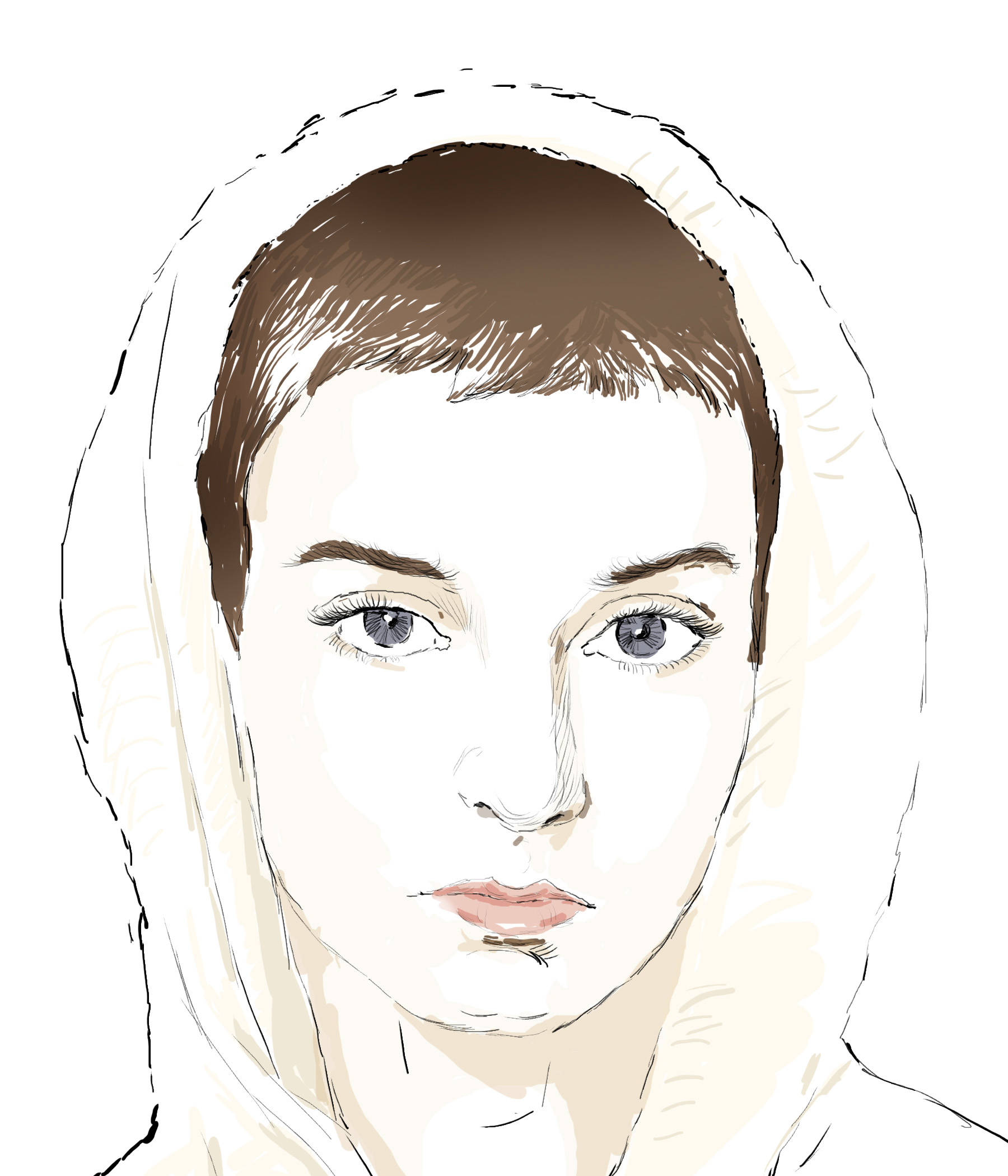
Dublin
Sinéad Marie Bernadette O'Connor was born in County Dublin in December 1966, the third of five children. She described her childhood as violently abusive, an account she set out in detail in her 2021 memoir Rememberings. After her parents separated and following a period of shoplifting, she was placed at fifteen in a Magdalene-run institution, part of the network of church-run laundries later exposed as a national scandal in Ireland.
It was a nun there who noticed her voice and arranged for guitar lessons. O'Connor was consistent about this all her life: the institution damaged her, and the same institution is where the music started.
Her mother died in a car accident in 1985, when O'Connor was eighteen. The relationship had been the source of most of the abuse she described, and her grief was correspondingly complicated for the rest of her life.
Fame, and the Photograph
The Lion and the Cobra arrived in 1987. Then in 1990 came I Do Not Want What I Haven't Got and her recording of Prince's "Nothing Compares 2 U", which went to number one around the world and made her, briefly, one of the most famous people alive.
In October 1992, on live American television, she tore up a photograph of Pope John Paul II in protest at the Catholic Church's concealment of child abuse. The reaction was immediate and enormous: she was booed off stage at a Bob Dylan tribute concert two weeks later, denounced on national media, and effectively removed from mainstream American radio.
She was thirty-one years early. The Church's systematic concealment of abuse in Ireland and elsewhere was documented in official inquiries over the following decades, and in 2010 the Pope issued a pastoral letter acknowledging the abuse in Ireland. By then O'Connor's career had absorbed the full cost of having said it first.
She was clear afterwards about what that period did to her, and about being treated, in her own phrase, as a crazy woman rather than a person making an argument.
Diagnosis, Then Revision
Around 2003, following a suicide attempt, O'Connor was diagnosed with bipolar disorder. In her 2007 interview with Oprah Winfrey she spoke about the diagnosis and about her depression in language that people still quote — describing herself as a bucket full of holes, leaking tears from every pore.
She was, for a period, one of the most visible people in music talking about bipolar disorder. Then, in 2014, she said that several doctors had concluded she had been misdiagnosed and that she did not have the condition. In later interviews and in Rememberings, she described diagnoses of complex post-traumatic stress disorder and borderline personality disorder, arising from the abuse she suffered as a child.
She was open about the years of treatment in between: long inpatient stays, medication, therapy, and skills she credited with keeping her alive. She described herself as a rescue dog — functioning normally until something in a situation resembled the original trauma.
Her 2015 hysterectomy, and the abrupt hormonal aftermath she said nobody had prepared her or her family for, precipitated one of the worst periods of her life.
Why the Misdiagnosis Matters
It would be easy to read O'Connor's story as a reason for scepticism about psychiatry. We would suggest almost the opposite reading.
Bipolar disorder and complex PTSD can look remarkably similar from the outside. Both produce mood instability, irritability, sleep disruption, impulsivity and profound depressive states. Distinguishing them often takes years, because it depends on the pattern over time and on a full trauma history that patients frequently cannot give until they trust someone enough to give it. Getting it wrong initially is common, and the revision is the system working rather than failing — the treatments differ substantially, and complex PTSD responds to trauma-focused therapy in ways that mood stabilisers alone will not achieve.
For readers here, the practical point is this. If a diagnosis does not fit your experience, or the treatment built on it is not working, that is information worth taking back to a clinician rather than a verdict you are stuck with. O'Connor pushed, and got a better answer.
Later Years and Death
O'Connor released ten studio albums, converted to Islam in 2018 and took the name Shuhada' Sadaqat while continuing to record under Sinéad O'Connor, and published Rememberings in 2021 to considerable acclaim.
In January 2022 her seventeen-year-old son Shane died. She was hospitalised in the aftermath, having posted publicly about wanting to end her own life, and she never fully recovered from the loss.
She was found unresponsive at her home in south London on 26 July 2023 and pronounced dead at the scene; she was 56. A coroner determined that she died of natural causes, and her death certificate recorded an exacerbation of chronic obstructive pulmonary disease and asthma with a respiratory infection. She was buried in Bray, County Wicklow, with a funeral reflecting her Muslim faith and Irish custom; the President and Taoiseach attended.
Legacy
The reassessment of Sinéad O'Connor began well before her death and accelerated sharply after it. The protest that ended her American career is now widely regarded as having been simply correct. The four-octave voice on I Do Not Want What I Haven't Got has never sounded dated.
What she contributed to the conversation this website is about is harder to measure but just as real. She talked about psychiatric hospitals, medication, trauma and suicidal thinking in public, in plain language, decades before it was safe to do so — and then she was willing to publicly revise her own account when the doctors revised theirs. That second act takes a particular kind of courage, and it is rarer than the first.
If any of this is close to home, please talk to someone. A doctor, a mental health professional, or a crisis line in your country — and emergency services if you are in immediate danger.
Frequently Asked Questions
Was Sinead O'Connor bipolar?
She was diagnosed with bipolar disorder around 2003 and spoke about it publicly, notably in a 2007 interview with Oprah Winfrey. In 2014 she said doctors had concluded the diagnosis was wrong. She later described diagnoses of complex post-traumatic stress disorder and borderline personality disorder connected to childhood abuse.
How did Sinead O'Connor die?
She was found unresponsive at her London home on 26 July 2023, aged 56. A coroner determined she died of natural causes, and her death certificate recorded an exacerbation of chronic obstructive pulmonary disease and bronchial asthma together with a respiratory tract infection.
Why is bipolar disorder confused with complex PTSD?
Both can produce mood instability, irritability, disrupted sleep, impulsivity and severe depression. Telling them apart depends on the pattern over time and on a full trauma history, which often takes years to establish. The distinction matters because the treatments differ substantially.
Notes & sources
This article draws on Sinead O'Connor's own public interviews, including her 2007 Oprah Winfrey interview and later statements about her misdiagnosis, her 2021 memoir Rememberings, and reporting on the coroner's findings and death certificate published in 2024.