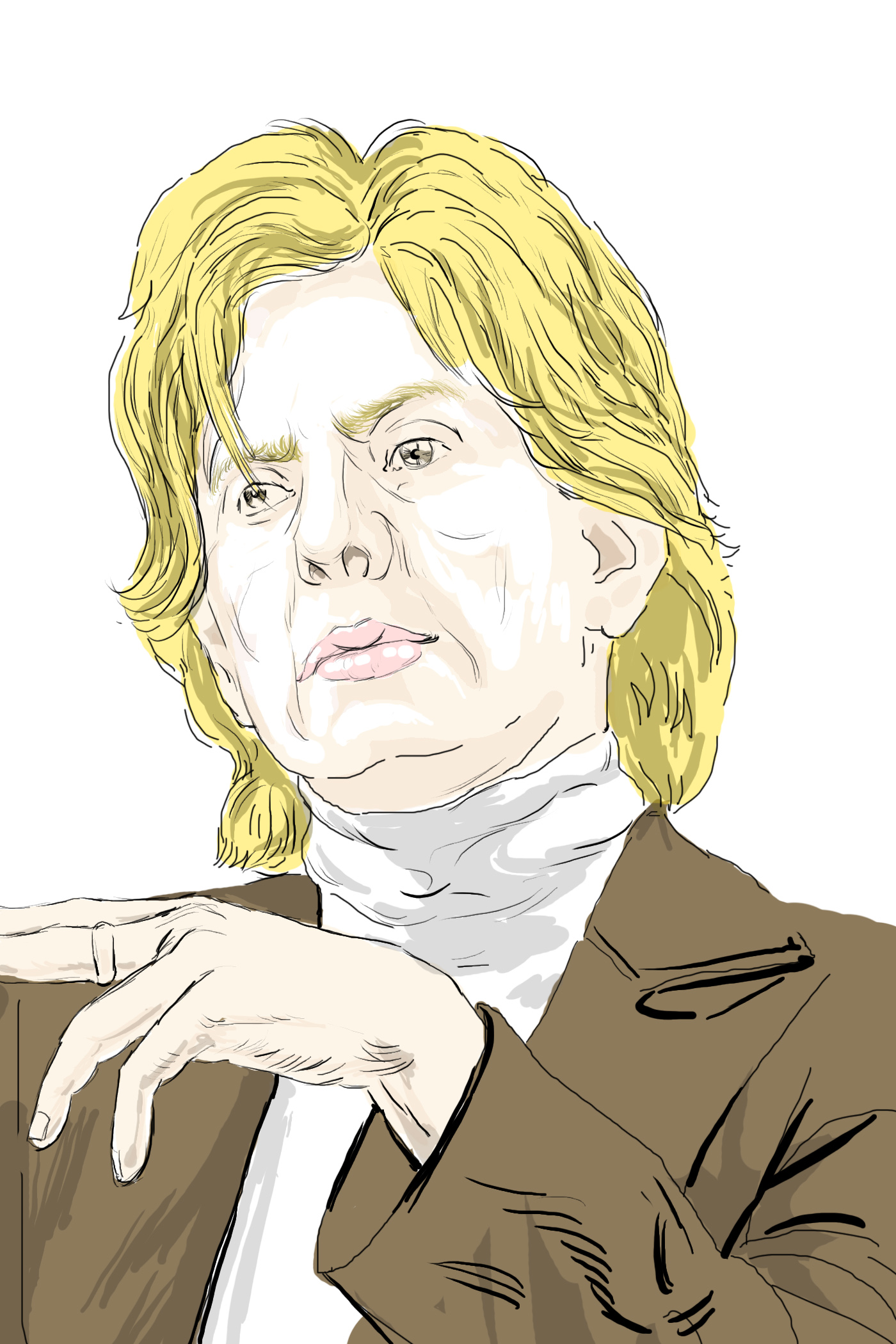
Patricia Cornwell essentially created the modern forensic thriller. Before Postmortem in 1990, crime fiction did not spend much time in the morgue; afterwards, a whole genre and several television franchises did little else.
She has also been publicly open about living with bipolar disorder — a diagnosis that arrived well into a career built on precision, research and relentless output.
Quick facts
- Born
- Patricia Carroll Daniels, June 9, 1956, Miami, Florida
- Known for
- The Kay Scarpetta novels, beginning with Postmortem (1990)
- Diagnosis
- Bipolar disorder, which she has discussed publicly
- Sales
- More than 100 million books sold worldwide
- Background
- Worked at the Office of the Chief Medical Examiner in Richmond, Virginia
A Difficult Start
Cornwell was born in Miami in 1956 and raised largely in Montreat, North Carolina. Her father left the family on Christmas Day when she was five. Her mother struggled with severe depression and was hospitalised, and Cornwell and her brothers were placed for a period with a foster family — who happened to be missionaries connected to Billy Graham's family, giving her childhood an unusual proximity to one of the most famous households in America.
She has spoken about depression in her own adolescence and about an eating disorder in her teens and twenties. Those years appear repeatedly, transmuted, in the psychological texture of her fiction.
She studied English, worked as a police reporter for the Charlotte Observer, and then took a job as a computer analyst at the Office of the Chief Medical Examiner in Richmond, Virginia. That job — six years of it, in an actual morgue — is the reason her books read differently from everyone else's.
Scarpetta
Cornwell wrote three novels that were rejected before an editor suggested she stop writing about the journalist and start writing about the medical examiner in the background. The result was Postmortem (1990), featuring Dr Kay Scarpetta.
It won the Edgar, Creasey, Anthony, Macavity and French Prix du Roman d'Aventure in a single year, which had never happened before. The series has run to more than two dozen books and over a hundred million copies sold, and it effectively invented forensic crime fiction as a commercial category.
Her working method has always been research-driven to an unusual degree: attending autopsies, training at forensic facilities, funding research, and at one point spending a reported fortune of her own money investigating the Jack the Ripper case — a project that produced two books and a great deal of argument.
The Diagnosis
Cornwell has spoken publicly about being diagnosed with bipolar disorder, and about the years before the diagnosis when the pattern was being treated as depression alone.
That sequence is extremely common and worth pausing on. People with bipolar disorder overwhelmingly seek help during depressive episodes, not manic ones — because the depression is what hurts, while elevated periods often feel like productivity, confidence and clarity rather than illness. The average gap between first seeking help and receiving a correct bipolar diagnosis is measured in years, and misdiagnosis as unipolar depression is the single most common reason.
It matters practically: antidepressants given alone to someone with bipolar disorder can precipitate mania. Getting the diagnosis right changes the treatment entirely.
Cornwell has described the illness in terms of the extremes rather than the mythology — the productive, driven, sleepless periods and the collapses — and has been matter-of-fact about being treated for it while continuing to write and publish on schedule.
A Life Lived Publicly
Cornwell's personal life has been unusually exposed for a novelist, partly through litigation and partly through a 1990s scandal involving an affair with an FBI agent's wife that became national news when the agent's marriage collapsed spectacularly.
She married Staci Gruber, a Harvard neuroscientist, in 2005. She has spoken about the stabilising effect of that relationship, and Gruber's professional field has given her an unusually well-informed household in which to manage a psychiatric condition.
She has continued to publish steadily for three and a half decades, moving between the Scarpetta series and other projects, and remains one of the highest-selling crime novelists in the world.
Legacy
Cornwell's influence on crime fiction is structural rather than stylistic: she moved the centre of gravity of the genre from the detective to the evidence, and a very large amount of what has been written and filmed since follows the path she cut.
Her relevance here is that she belongs to the group of people on this site whose stories are undramatic in the best way. Diagnosed, treated, still working, still publishing, thirty-five years into a career. That is a far more representative outcome for bipolar disorder than the ones that make better documentaries, and it deserves to be said more often.
Frequently Asked Questions
Does Patricia Cornwell have bipolar disorder?
Yes. Cornwell has spoken publicly about her bipolar disorder diagnosis and about being treated for it, including the period beforehand when she was treated for depression alone.
Why is bipolar disorder often first misdiagnosed as depression?
Because people seek help during depressive episodes rather than elevated ones. Elevated periods frequently feel like energy, confidence and productivity rather than illness, so patients do not report them. The distinction matters because antidepressants given without a mood stabiliser can trigger mania in someone with bipolar disorder.
What is Patricia Cornwell best known for?
The Kay Scarpetta novels, beginning with Postmortem in 1990, which established forensic crime fiction as a genre. She has sold more than 100 million books worldwide.
Notes & sources
This article draws on interviews Patricia Cornwell has given about her diagnosis and personal history, and on public biographical and bibliographic information about her career.